Understanding Your Knee Pain Before You Start
Knee pain is one of the most common obstacles people face when trying to maintain a regular fitness routine. Before you lace up your sneakers and commit to any cardio program at home, it helps to understand what type of knee discomfort you are dealing with. **Acute knee pain** typically comes on suddenly, often after a specific incident like a twist, fall, or strain — this kind of pain usually peaks within a few days and gradually fades with rest. **Chronic knee pain**, on the other hand, develops slowly over months or years and is often linked to repetitive stress, aging, or underlying conditions such as osteoarthritis or patellofemoral pain syndrome.
For fitness-minded individuals, common culprits include iliotibial band tightness, patellar tendinitis, meniscus irritation, and general cartilage wear-and-tear. If your knees ache primarily during bending, stair climbing, or weight-bearing activities, low impact cardio is an exc nt starting point that protects the joint while still delivering real cardiovascular results. However, **you should consult a healthcare professional such as a physical therapist or sports medicine doctor before beginning any new exercise program** if you experience swelling, locking, instability, or pain that does not improve within two to three weeks of rest and self-care.
Taking a brief self-assessment now can save you weeks of frustration later. Rate your pain on a simple scale of one to ten during everyday activities like walking, standing, and climbing stairs. Share those numbers with your doctor. Understanding the baseline condition of your knees sets the stage for a safe, effective low impact cardio routine you can stick with for the long haul.
Quick pick: Compare top-rated Cardio options.
Why Low Impact Cardio Is a Smart Choice for Sensitive Knees
High-impact exercises like running, jumping rope, and plyometric box jumps deliver exc nt cardiovascular conditioning, but they also subject your knees to forces **three to five times your body weight** with every foot strike. For someone with already aggravated knees, that repeated jarring can stall recovery and worsen discomfort over time. Low impact cardio solves this problem by keeping at least one foot planted on the ground (or submerged in water) at all times, dramatically reducing compressive load on your knee joints.
The benefits extend well beyond joint protection. Engaging in regular low impact cardio — even 20 to 30 minutes a day — has been shown to lower blood pressure, improve cholesterol profiles, enhance insulin sensitivity, and boost mood through endorphin release. You do not sacrifice cardiovascular gains either. Studies comparing moderate-intensity cycling or swimming against running show **comparable improvements in VO2 max** when effort levels are matched. For more on how cardio supports your overall health, check out our cardio exercise guide.
Another significant advantage is the lower risk of compensatory injury. When high-impact movements hurt one joint, people often unconsciously shift their weight and stress other muscles and joints, creating new problems. Low impact options keep your movement pattern smooth and symmetrical, protecting the entire kinetic chain. For anyone over 40, returning from an injury, or managing a chronic condition, this built-in safety margin makes low impact cardio a sustainable long-term choice rather than a temporary compromise.
The Best Low Impact Cardio Exercises You Can Do at Home
You do not need a gym membership or expensive equipment to get an effective cardio workout that is gentle on your knees. Here are the top options to explore in your own living room or backyard.
Swimming and Water-Based Workouts
Water is roughly **800 times denser than air**, which means your body experiences resistance in every direction without any jarring impact. Immersing yourself to the waist reduces body weight stress on the knees by 50 percent or more, while chest-deep immersion drops joint load by roughly 85 percent. Swim laps at a moderate pace, perform water jogging, or follow along with a water aerobics video to elevate your heart rate safely. The buoyancy supports your joints while the resistance builds muscular endurance in your legs and core.
Indoor or Stationary Cycling
An exercise bike or stationary cycling session is arguably the single most knee-friendly cardio option available. The circular pedaling motion keeps the knee moving through a comfortable, controlled range of motion without any impact loading. Adjust the seat height so your leg has a **slight bend at the bottom of the pedal stroke** — too low strains the front of the knee; too high causes hip-flexor strain. Aim for a cadence of 60 to 90 revolutions per minute and increase resistance gradually as your endurance builds.
Elliptical Machine Workouts
A quality elliptical trainer mimics the natural walking and running motion while keeping your feet locked onto the pedals, eliminating the heel-strike impact that plagues traditional treadmills. Most modern ellipticals offer **adjustable stride length and incline**, letting you increase intensity without adding joint stress. Aim for 20 to 30 minutes at a moderate perceived exertion level — you should be breathing heavier than normal but still able to hold a conversation.
Brisk Walking and Gentle Hiking
Walking gets more respect as a workout than it typically receives. A brisk 15-minute walk around your neighborhood engages the large muscle groups of your legs, elevates your heart rate, and strengthens bones without the harsh impact of running. If you have access to gentle trails or a treadmill set to a slight incline, hiking adds variety and recruits your glutes and hamstrings more deeply, taking additional pressure off the knees.
Warming Up the Right Way Before Low Impact Cardio
Skipping a proper warm-up is one of the most common mistakes beginners make, and it is especially risky when your knees are already vulnerable. A targeted warm-up increases blood flow to the muscles surrounding the knee — the quadriceps, hamstrings, and calves — and gently mobilizes the joint itself, **raising tissue temperature by 1 to 3 degrees Celsius** to improve elasticity and reduce the likelihood of strain.
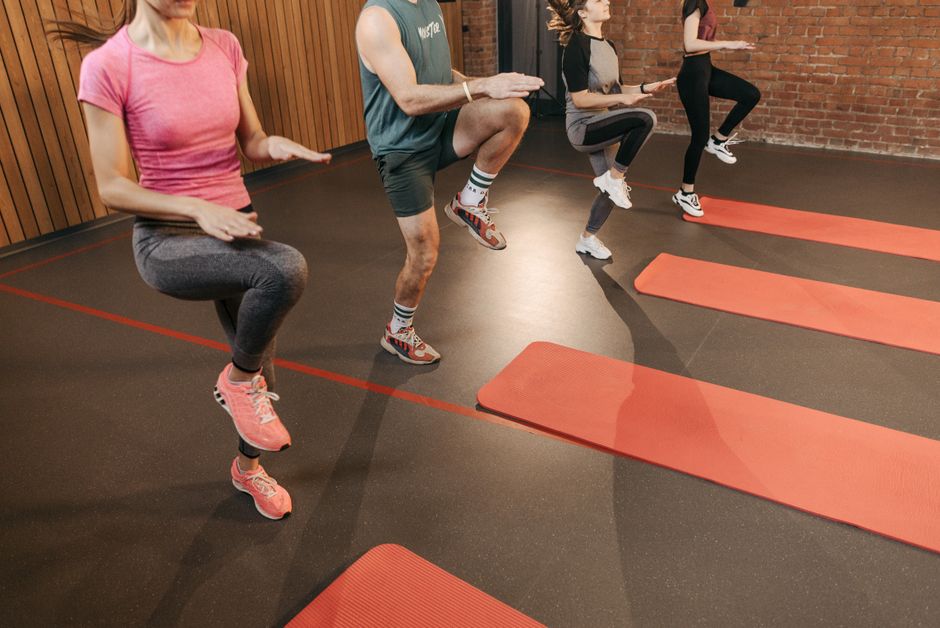
Start with **five minutes of light activity** such as marching in place, gentle arm circles, or a slow walk around your home. Then move into dynamic stretches that move the knee through its full range without holding any position. Leg swings (forward and backward, then side to side) work the hip flexors and hamstrings together. Wall sits held for 10 to 15 seconds activate the quadriceps while preparing the knee joint for load. Standing knee lifts to chest level gently flex and extend the joint. **Perform 8 to 10 repetitions of each movement** before progressing to your main cardio activity.
If you have access to a recumbent bike or can sit on a sturdy chair, pedal at zero resistance for two to three minutes as an additional knee preparation step. This synovial fluid lubrication inside the joint reduces friction and nourishes the cartilage before you ask the knee to work harder.
Cooling Down and Stretching After Your Workout
Just as a warm-up prepares your body for effort, a proper cool-down helps your muscles transition back to a resting state and minimizes post-workout soreness. After your cardio session, spend **five to ten minutes walking in place at a gradually decreasing pace** until your heart rate approaches normal. This “flush” period helps clear metabolic byproducts like lactic acid from the working muscles.
Once your heart rate has settled, transition to static stretching — positions you hold for 20 to 30 seconds without bouncing. Focus on the **quadriceps, hamstrings, hip flexors, and calves** since tightness in any of these muscle groups directly affects knee tracking and comfort. A seated hamstring stretch, a standing quad stretch holding your ankle behind you, and a standing calf stretch against a wall are all exc nt choices. **Never stretch to the point of sharp pain** — a gentle pull with steady breathing is far more effective than aggressive force.
Foam rolling the IT band and outer thigh with a cylinder roller can complement static stretching if you have one available. Even five minutes of gentle post-workout stretching three to four times per week has been shown to measurably improve joint range of motion and reduce the lingering stiffness that discourages consistency.
Building a Sustainable Routine and Staying Motivated
One of the biggest challenges with any home-based fitness routine is **maintaining consistency week after week**. The convenience of working out at home is a major advantage, but without the structure of a gym class or trainer appointment, it is easy to let days slip by. Start by setting a specific time block on your calendar — treat it like an appointment you cannot cancel. Morning workouts before the day’s responsibilities accumulate tend to have higher long-term adherence rates for most people.
Set **SMART goals** — Specific, Measurable, Achievable, Relevant, and Time-bound. Rather than a vague goal like “get healthier,” commit to something concrete such as “I will walk briskly for 20 minutes, four days a week, for the next four weeks.” Track your sessions in a simple notebook, a phone app, or even a wall calendar where you can see your progress accumulating. Crossing off completed workout days provides a small but real psychological boost that reinforces the habit loop.
If motivation wanes, find an accountability partner — a friend who checks in, a family member who joins you on a walk, or an online community of people with similar fitness goals. Many free fitness forums and apps allow you to log workouts and celebrate milestones with others who understand the challenge of working around physical limitations. Remember that progress is not always linear. Some weeks you may add five minutes to your session; other weeks you may simply maintain — both outcomes represent genuine commitment and deserve recognition.
Eating to Support Joint Health and Cardiovascular Fitness
Exercise and nutrition work hand in hand, and what you eat has a direct impact on how your knees feel and how quickly you recover between workouts. **Anti-inflammatory foods** are particularly valuable for anyone managing joint discomfort. Fatty fish such as salmon, sardines, and mackerel deliver omega-3 fatty acids that have been shown in clinical research to reduce markers of inflammation and ease morning stiffness in people with knee osteoarthritis. Aim for at least **two servings of oily fish per week**, or consider a high-quality fish oil supplement after consulting your doctor.
Colorful vegetables and fruits supply antioxidants and polyphenols that combat oxidative stress at the cellular level. Tart cherries, blueberries, spinach, kale, and broccoli are especially nutrient-dense choices. Whole grains like oats, quinoa, and brown rice provide sustained energy for longer cardio sessions without the blood sugar spikes associated with refined carbohydrates. Nuts and seeds — particularly walnuts, almonds, and chia seeds — add magnesium and zinc, minerals that support muscle function and tissue repair.
Key nutrients for strong joints include **calcium and vitamin D** (found in fortified plant milks, dairy, and sunlight exposure), **vitamin C** from citrus and bell peppers for collagen synthesis, and **collagen peptides** which are increasingly popular as supplements and are also present in bone broth. Reducing processed foods, excess sugar, and alcohol also helps lower systemic inflammation, creating a more favorable internal environment for cartilage health and cardiovascular improvement alike.
| Nutrient | Food Sources | Joint Benefit |
|---|---|---|
| Omega-3 fatty acids | Salmon, sardines, walnuts | Reduces inflammation |
| Vitamin C | Bell peppers, oranges, strawberries | Supports collagen production |
| Calcium + Vitamin D | Fortified milk, eggs, sunlight | Strengthens bone density |
| Antioxidants | Blueberries, spinach, kale | Combats oxidative stress |
| Collagen peptides | Bone broth, supplements | Supports cartilage repair |
Signs You May Need Additional Support Beyond Low Impact Cardio
Low impact cardio is a powerful tool, but it is not a substitute for professional evaluation when symptoms warrant it. **Pay close attention to how your knees respond** in the days and weeks after starting a new routine. Some mild soreness after a new activity is normal — think of it as muscles and joints adapting rather than warning signs. However, sharp pain during exercise, new swelling that appears within hours of a workout, a sensation of the knee “giving way,” or pain that worsens with each successive session are red flags that deserve prompt professional attention.
If your knee discomfort does not improve after four to six weeks of consistent low impact activity and proper nutrition, consider consulting a physical therapist who can assess your gait mechanics, muscle imbalances, and joint mobility in detail. Physical therapists often identify subtle contributing factors — such as weak glutes, flat feet, or poor hip mobility — that general exercise advice misses entirely. **A targeted corrective exercise program** combined with your low impact cardio routine often produces significantly better outcomes than exercise alone.
Other supportive options worth discussing with your healthcare provider include custom orthotics for foot and ankle alignment, a knee brace for added stability during activity, corticosteroid or hyaluronic acid injections for advanced arthritis, and in rare cases, surgical interventions. Low impact cardio and strength training remain the foundation of conservative management, but having a professional guide your treatment ensures you are not inadvertently accelerating joint wear while trying to heal.
Frequently Asked Questions (FAQ)
What is the best time of day to do low impact cardio for bad knees?
The truth is that **the best time is whenever you can do it consistently**. Some people find morning workouts set a positive tone for the entire day and build a habit more easily, while others prefer afternoon or evening sessions when their muscles and joints are already warm from normal daily activity. Listen to your body: if your knees feel stiffer in the morning and loosen up as the day progresses, an afternoon session may feel more comfortable. Consistency matters far more for results than the specific hour on the clock.
How long should I exercise each day for the best results?
For general cardiovascular health and joint conditioning, **20 to 30 minutes of low impact cardio, three to five days per week**, is an exc nt starting point. If you are just beginning or managing significant knee discomfort, start with 10 to 15 minutes and gradually add two to three minutes per session as your tolerance improves. Quality matters as much as quantity — a focused 20-minute session with proper form and attention to your body cues will outperform a distracted 45-minute workout every time.
Can I do low impact cardio exercises every day?
While light activity such as gentle walking can be done daily, **most people benefit from one or two rest or active recovery days per week**. Rest days allow the muscles, ligaments, and cartilage to adapt and repair from the training stimulus. On rest days, consider gentle stretching, foam rolling, a slow walk in nature, or a mobility session instead of a structured cardio workout. If you experience persistent soreness or swelling, add an extra rest day before resuming. The goal is steady progress over months, not heroic effort followed by a painful setback.
What are common mistakes people make when starting low impact cardio?
The most frequent pitfalls include **ramping up duration or intensity too quickly**, neglecting a proper warm-up, and ignoring pain signals during the workout. Another mistake is relying exclusively on cardio while neglecting strength training for the muscles that support the knee — particularly the quadriceps, hamstrings, and glutes. Even bodyweight exercises like chair squats, straight-leg raises, and glute bridges performed two to three times per week significantly improve knee stability and reduce strain during cardio sessions.
How can I track whether my knees are actually improving?
Keep a simple workout log that records the **date, exercise type, duration, average heart rate, and a 1-to-10 pain rating** before, during, and after each session. Over four to eight weeks, look for trends: Are you completing longer sessions without an increase in pain? Is your resting heart rate dropping as your aerobic capacity improves? Can you climb stairs more easily between workouts? These markers, combined with how your knees feel on a scale of one to ten, give you concrete evidence that your routine is working. Share these logs with your doctor or physical therapist at your next appointment for a more professional assessment of your progress.
Top Product Recommendations
| Product Name | Rating | Key Feature | Est. Price | Action |
|---|---|---|---|---|
| Top-rated low impact cardio equipment for home | ★★★★★ | Editor-recommended low impact cardio equipment for home from this guide | $18–$42 | Check Lowest Price on Amazon |
| Best-value exercise bike for bad knees | ★★★★☆ | Affordable exercise bike for bad knees — strong everyday results | $12–$28 | Check Lowest Price on Amazon |
| Premium elliptical machine low impact cardio | ★★★★☆ | Higher-end elliptical machine low impact cardio for visible, lasting results | $45–$95 | Check Lowest Price on Amazon |
Affiliate Disclosure: This post contains affiliate links. We may earn a commission if you buy through our links, at no extra cost to you.
Leave a Reply