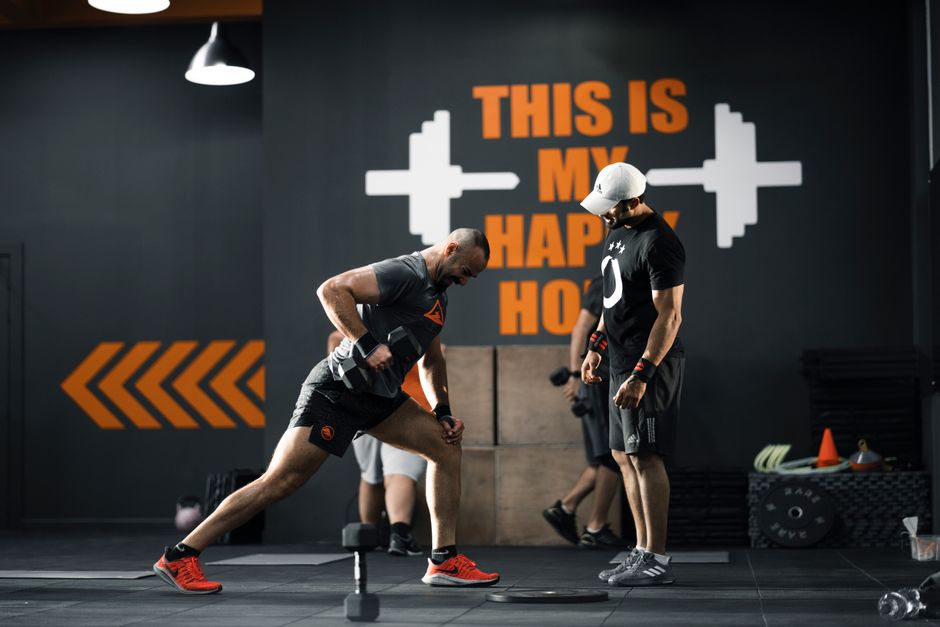
Why Strength Training Is a Game-Changer for Men
Starting a strength training program for men beginners at home is one of the most empowering decisions you can make for your health and confidence. Unlike gym memberships that require commuting, scheduling around peak hours, and sometimes intimidating environments, building muscle in your own living room strips away those barriers entirely. You control the music, the temperature, and the pace — and research consistently shows that convenience is one of the biggest predictors of whether someone sticks with a fitness routine long-term.
The benefits go far beyond aesthetics. Strength training increases bone density, improves insulin sensitivity, and boosts resting metabolism, meaning your body burns more calories even when you are not working out. For men specifically, lifting weights supports healthy testosterone levels and reduces the risk of age-related muscle loss, a condition called sarcopenia. Even if you have never touched a dumbbell, your body is remarkably adaptable, and meaningful changes can happen within the first four to six weeks of consistent training.
Before you grab any weight, understand this: technique matters more than weight. Poor form is the single most common reason beginners stall or get injured. This guide walks you through everything you need to build a sustainable strength training program at home — no fluff, no gimmicks, just practical steps you can start today.
- Strength training improves bone density, metabolism, and hormonal health in men
- Home-based training removes gym-access barriers and fits into any schedule
- Proper form prevents injury and accelerates long-term progress
Quick pick: Compare top-rated Mens Fitness options.
Building a Foundation: The Best Exercises for Beginners
Every effective strength training program for men beginners at home starts with mastering a handful of compound movements. These exercises work multiple muscle groups simultaneously, making them far more efficient than isolation exercises when you are working with limited equipment or time.
**The Squat** is the cornerstone of any program. It targets your quadriceps, glutes, hamstrings, and core all at once. If you do not have a barbell, start with bodyweight squats, then add resistance by holding a pair of dumbbells or a heavy backpack. Keep your weight in your heels, push your hips back, and ensure your knees track over your toes. Aim for a range of motion where your hip crease drops below your knee level for full muscle engagement.
**The Deadlift** — even in its bodyweight Romanian variation — strengthens your posterior chain: hamstrings, glutes, and lower back. These muscles are critical for posture and injury prevention, yet most sedentary men have serious weaknesses here. Start with a kettlebell or a couple of dumbbells between your legs, hinge at your hips rather than bending your back, and feel the stretch in your hamstrings at the bottom before driving your hips forward to stand.
**Push Movements** like the push-up, bench press, and overhead press build your chest, shoulders, and triceps. Begin with push-ups against a wall or on your knees if a full push-up is too challenging, then progress to standard push-ups on the floor. An adjustable dumbbell set lets you scale the overhead press as you grow stronger without buying new equipment.
**Pull Movements** round out your program by targeting the back, rear shoulders, and biceps. Pull-ups are the gold standard, but if you cannot do one yet, use an assisted pull-up band or a low row with a dumbbell. Bent-over rows with a dumbbell or a loaded backpack teach you to pull with proper scapular retraction, which counteracts the rounded-posture effect of too much sitting.
| Exercise | Primary Muscles | Equipment Needed | Beginner Rep Range |
|---|---|---|---|
| Bodyweight Squat | Quads, Glutes, Core | None | 12–15 |
| Romanian Deadlift | Hamstrings, Glutes, Back | Dumbbells or Kettlebell | 10–12 |
| Push-Up | Chest, Shoulders, Triceps | None | 8–12 |
| Dumbbell Row | Back, Biceps | Dumbbell | 10–12 per side |
| Overhead Press | Shoulders, Triceps | Dumbbells | 8–10 |
Designing Your At-Home Strength Program
A well-structured strength training program for men beginners at home does not require hour-long daily sessions. Three to four workouts per week is the sweet spot for most people — it delivers enough stimulus for muscle growth while giving your body adequate time to recover and adapt.
Each session should last roughly 45 to 60 minutes, including a five-minute warm-up. Structure your workout as a full-body session or an upper-body and lower-body split. Full-body workouts three times per week are ideal for true beginners because they reinforce movement patterns across all major muscle groups without the complexity of a split routine.
**Progressive overload** is the engine of all strength gains. This means gradually increasing either the weight, the number of reps, the number of sets, or reducing rest time between sets. Without this progression, your body plateaus within a few weeks. A simple rule: add one rep or one set per week, and increase weight by five pounds when you can complete all sets and reps with good form.
Here is a sample four-week beginner program to follow:
- **Week 1–2:** Master the five foundational movements with light resistance. Focus entirely on form.
- **Week 3–4:** Add weight. Target three sets of 10–12 reps for upper-body exercises and 12–15 reps for lower-body exercises. Rest 60–90 seconds between sets.
- **Ongoing:** Increase weight by 2.5 to 5 pounds per week when you can finish all sets and reps cleanly.
Consistency beats intensity every time. A moderate workout you complete every scheduled day is worth far more than an extreme session that leaves you too sore to train again for a week.
Creating a Home Gym Setup on a Budget
You do not need a garage full of equipment to build meaningful muscle at home. In fact, some of the most effective training requires only a few pieces of versatile gear. The key is buying smart and choosing equipment that serves multiple functions.
**Essential equipment list**:
- Adjustable dumbbells or a dumbbell set ranging from 5 to 50 pounds
- A kettlebell between 25 and 35 pounds for hinge and swing movements
- A pull-up bar that fits in a doorframe or mounts to a wall
- A workout mat for floor exercises and core work
- Resistance bands for assisted movements and warm-ups
**Affordable alternatives** work just as well. A heavy backpack loaded with textbooks or water bottles substitutes for a kettlebell. Towel pull-aparts build back strength without any equipment. Wall push-ups and incline push-ups on a sturdy chair cover your push pattern progression until you are ready for floor push-ups.
Organize your space so everything is accessible before you start. Spending two minutes searching for your only pair of dumbbells mid-workout disrupts your rhythm and mentally resets your momentum. A dedicated corner of a bedroom, garage, or basement works perfectly — aim for at least a 6-by-6 foot area with enough ceiling clearance for overhead movements and jumping if your program includes plyometrics.
With just adjustable dumbbells, a kettlebell, and a pull-up bar, you can perform over 30 different strength exercises targeting every major muscle group. That is a complete gym in under 20 square feet.
Nutrition and Hydration for Muscle Growth
Training without proper nutrition is like trying to drive a car without fuel. Your muscles need the right combination of protein, carbohydrates, and fats to repair and grow after strength training sessions.
**Protein** is the most critical macronutrient for anyone in a strength training program. Aim for at least 1.6 to 2.2 grams of protein per kilogram of body weight daily — roughly 110 to 150 grams for a 175-pound man. Distribute your intake across three to five meals, including a meal within two hours after your workout. Whole-food sources like chicken breast, eggs, Greek yogurt, fish, and legumes should form the foundation of your plate. Protein powder is a convenient supplement, not a substitute for real food.
**Carbohydrates** fuel your workouts and replenish muscle glycogen, the energy source your body taps during resistance training. Do not fear carbs if you are training consistently. Choose complex sources like oats, sweet potatoes, brown rice, and whole-grain bread. Time your larger carb meals around your workout window for optimal energy and recovery.
**Hydration** directly affects strength output. Even a 2% drop in hydration levels can reduce exercise performance noticeably. Drink at least half an ounce to an ounce of water per pound of body weight daily, and add an extra 16 to 24 ounces for every 30 minutes of training. If your urine is dark yellow, drink more water. Clear to light-yellow urine generally indicates adequate hydration.
Skip expensive pre-workout supplements in the early weeks. A banana, a handful of almonds, or a glass of water with a small amount of fruit provides enough energy for a productive 45-minute session.
Staying Motivated and Consistent Over Time
The hardest part of any strength training program for men beginners at home is not the workouts themselves — it is showing up consistently over weeks and months. Motivation fluctuates, life gets busy, and one missed workout can easily become a two-week gap if you do not have a system in place.
**Set specific, measurable goals.** Vague intentions like “get stronger” do not hold up against the alarm snooze button. Instead, write down concrete targets: “Deadlift my body weight within 12 weeks” or “Complete 20 push-ups in a row by month two.” Write them on a whiteboard in your workout space where you see them every morning.
**Track your progress.** Keep a simple training journal or use a free app to log every workout — the exercise, the weight, the sets, and the reps. Looking back at entries from four weeks ago and seeing that you benched 95 pounds for five reps when you are now pressing 125 for six reps is one of the most motivating experiences in fitness. The numbers do not lie.
**Stack your habit.** Attach your workout to an existing routine. For example, always train at the same time each day — right after you make your morning coffee, or immediately after dinner. The more automatic the trigger, the less willpower you need to get started.
Celebrate small wins. Completing your first full week of training, adding five pounds to a lift, or finishing a workout when you genuinely did not feel like it — these deserve recognition. Small celebrations reinforce the identity you are building: you are someone who strength trains, not someone who is trying to start.
Preventing Injuries and Avoiding Common Mistakes
Most injuries in strength training come from three sources: lifting too much weight too soon, sacrificing form for reps, and skipping the warm-up entirely. All three are entirely preventable with a disciplined approach.
**Warm up for five to eight minutes before every session.** A warm-up is not optional. It increases blood flow to your muscles, raises your core temperature, and primes your nervous system for heavier lifting. A dynamic warm-up might include five minutes of light cardio — jumping jacks, high knees, or a brisk walk — followed by two light sets of your first exercise using roughly 50% of your working weight.
**Respect pain versus discomfort.** Mild muscle soreness after a workout is normal and expected. Sharp pain in a joint, a popping sensation, or pain that radiates down a limb is not. When you feel genuine pain during an exercise, stop immediately. Ice the area, rest for a few days, and consider seeing a physical therapist or sports medicine doctor before resuming that movement.
**Learn to recognize form breakdowns.** Common beginner mistakes include rounding the lower back during deadlifts, letting the knees cave inward during squats, and shrugging the shoulders during rows and presses. Film yourself from the side during your first few weeks of training. Compare your form to credible instructional sources and make corrections before bad habits calcify into muscle memory.
If you have a pre-existing heart condition, serious joint problems, or are returning from a significant injury, consult a healthcare professional before starting a structured strength training program. This is not about being overly cautious — it is about making informed decisions that protect your long-term health.
Frequently Asked Questions
How long does it take to see results from a home strength training program?
Most men notice initial strength gains within two to three weeks, especially if they are new to resistance training. Visible changes in muscle definition and body composition typically appear within six to eight weeks of consistent training and adequate nutrition. Patience and consistency are far more important than any workout intensity shortcut.
Can I build muscle at home without a lot of equipment?
Absolutely. Bodyweight exercises like push-ups, pistol squats, and inverted rows using a sturdy table or pull-up bar can build significant muscle for beginners. Adjustable dumbbells and a kettlebell expand your options considerably. The principle that drives muscle growth is mechanical tension and progressive overload, not the price tag on your equipment.
Should I train every day or take rest days?
For most beginners, three to four strength training sessions per week with at least one full rest day between sessions is ideal. Your muscles grow during recovery, not during the workout itself. Overtraining — training too frequently or too intensely without adequate rest — leads to fatigue, stagnation, and a higher risk of injury.
Explore more mens fitness guides on our site.
Top Product Recommendations
| Product Name | Rating | Key Feature | Est. Price | Action |
|---|---|---|---|---|
| Top-rated adjustable dumbbells for home gym | ★★★★★ | Editor-recommended adjustable dumbbells for home gym from this guide | $18–$42 | Check Lowest Price on Amazon |
| Best-value kettlebell for strength training men | ★★★★☆ | Affordable kettlebell for strength training men — strong everyday results | $12–$28 | Check Lowest Price on Amazon |
| Premium doorframe pull-up bar | ★★★★☆ | Higher-end doorframe pull-up bar for visible, lasting results | $45–$95 | Check Lowest Price on Amazon |
Affiliate Disclosure: This post contains affiliate links. We may earn a commission if you buy through our links, at no extra cost to you.
Leave a Reply