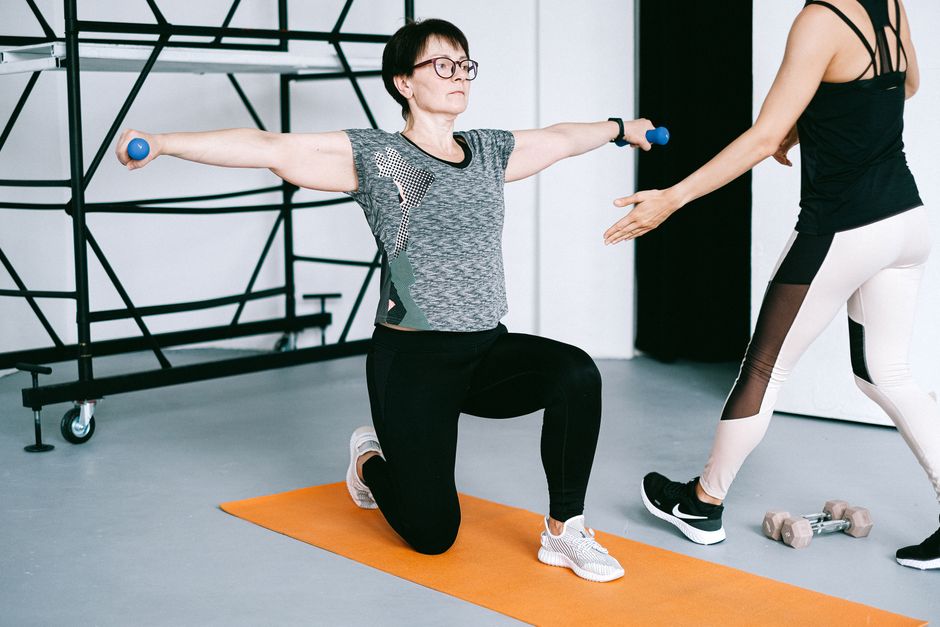
Understanding Home Workouts for Women Over 40
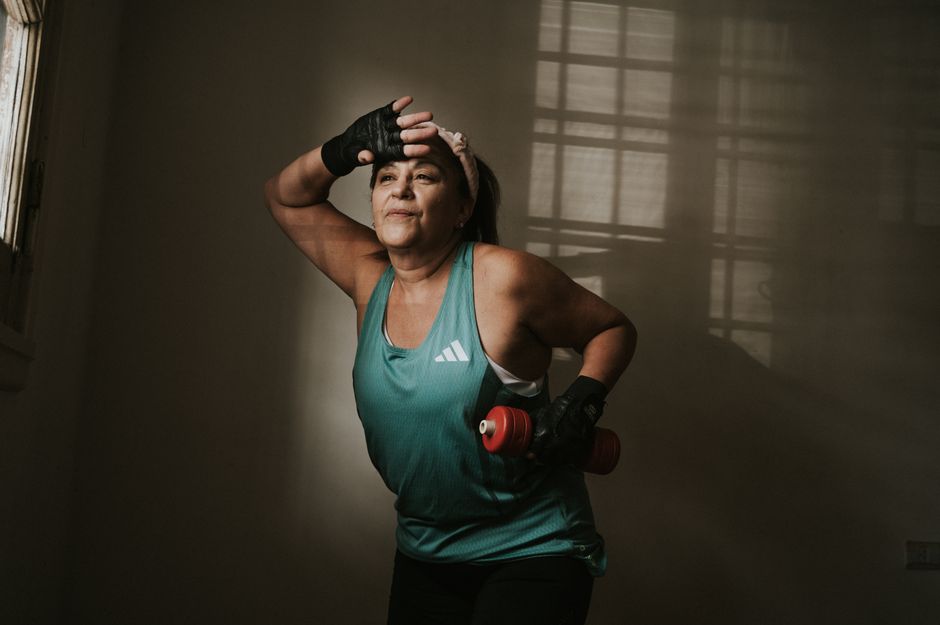
If you’re a woman over 40 looking to get fit without a gym membership, you’re in the right place. A **home workout plan for women over 40 no equipment** can be just as effective as anything you’d do at a gym — often more so, because you train your body as a unit rather than relying on machines to isolate muscles. The key is understanding which fitness components to prioritize and why they matter more as you age.
After 40, women experience gradual declines in muscle mass (a process called sarcopenia), bone density, and joint flexibility. Exercise directly counters all three. For women in this stage of life, **strength, flexibility, and balance** form the non-negotiable triad of a smart fitness plan. Pairing those three with a habit of consistency — not intensity — is the single biggest predictor of long-term results.
Before choosing any routine, honestly assess where you are right now. Can you hold a plank for 20 seconds? Can you complete 10 bodyweight squats without knee pain? Your starting point determines your starting volume, and **setting realistic goals** prevents the burnout that sidelines most beginners within three weeks.
Quick pick: Compare top-rated Womens Fitness options.
Crafting Your Ideal No-Equipment Weekly Plan
A balanced weekly structure should blend cardio, strength, and mobility work. Aim for **4–5 workout days per week**, with at least 2 dedicated to strength training and 2 to cardio or active recovery. The remaining day (or days) should cover flexibility and balance — components many women skip but desperately need after 40.
Progressive overload is how you keep making gains without adding equipment. That means gradually increasing reps, sets, or exercise difficulty over time.
- **Weeks 1–2:** 2 sets × 10 reps per exercise, focus on mastering form
- **Weeks 3–4:** 3 sets × 12 reps, add one harder variation per movement
- **Month 2 and beyond:** introduce tempo training — slow the eccentric phase to 3–4 seconds for greater muscle activation
For additional guidance on building sustainable fitness habits, explore the full range of women’s fitness articles available in this category.
Cardiovascular Exercises for Heart Health
Cardio doesn’t require a treadmill. **No-equipment cardio** options like jumping jacks, high knees, marching in place, and modified burpees elevate your heart rate effectively while being forgiving on aging joints. Low-impact alternatives — such as step touches, lateral shuffles, and slow-speed mountain climbers — deliver similar cardiovascular benefits with significantly less stress on knees and hips.
Aim for **20–30 minutes of moderate-intensity cardio** on 3 days per week. Moderate intensity means you can speak in short sentences but cannot hold a long conversation. Use the **talk test or a simple heart rate monitor** to stay in your target zone — roughly 50–70% of your maximum heart rate, or about 220 minus your age.
- **Beginner:** 15 min march-in-place + step touches, 3×/week
- **Intermediate:** 25 min circuit of jumping jacks, high knees, low-impact burpees
- **Advanced:** 30 min HIIT — 40 sec work / 20 sec rest, 6 rounds
Strength Training Essentials Without Equipment
Bodyweight strength training is legitimate resistance training. Squats, push-ups, glute bridges, reverse lunges, and Superman holds target every major muscle group. **Proper form is non-negotiable** — a sloppy squat with extra reps does less good and more harm than a clean squat at lower volume.
Key form cues to memorize:
- **Squat:** feet hip-width, chest tall, knees track over second toe, hips crease below parallel
- **Push-up:** body in one straight line, elbows at 45° from torso (not flared out)
- **Glute bridge:** drive through heels, squeeze glutes at the top, do not hyperextend the lower back
Build **2 strength days per week** with 48 hours of recovery between sessions. Rest days are when muscle actually rebuilds — skipping them slows progress and raises injury risk.
| Exercise | Beginner | Advanced |
|---|---|---|
| Squat | 3 × 10 bodyweight | 3 × 15 jump squat |
| Push-up | 3 × 8 knee push-up | 3 × 12 full push-up |
| Glute Bridge | 3 × 12 standard | 3 × 10 single-leg |
| Reverse Lunge | 3 × 8 each side | 3 × 12 with knee drive |
| Plank | 3 × 20 sec | 3 × 45 sec |
Flexibility and Balance Exercises for Aging Gracefully
Flexibility work is the most skipped component in women’s fitness — and the most important over 40. Tight hip flexors, hamstrings, and thoracic spine directly contribute to back pain, poor posture, and increased fall risk. Dedicating even **10 minutes daily to stretching** produces measurable improvements within 4 weeks.
Balance exercises are equally underrated. Single-leg stands, heel-to-toe walks, and side-leg raises challenge the stabilizer muscles that protect your knees and ankles. Start each session with a **5-minute dynamic warm-up** (leg swings, arm circles, cat-cow stretches) and end with **5–10 minutes of static stretching**, holding each position for 20–30 seconds.
- **Hip flexor stretch** (kneeling lunge): 30 sec each side
- **Seated hamstring reach:** 30 sec each side
- **Standing single-leg balance:** 30 sec each side, eyes closed for a greater challenge
- **Chest-opener stretch** (arms clasped behind back): 20 sec
Staying Motivated and Consistent With Your Workout Plan
Motivation is unreliable — **systems and habits are what actually keep you consistent.** Schedule your workouts the same way you schedule a dentist appointment: block the time, protect it, and show up even when you do not feel like it. Research consistently shows that habit stacking (attaching a new habit to an existing one) dramatically improves adherence over time.
Finding an accountability partner — a friend, a neighbor, or an online community — can effectively double your follow-through rate. Sharing your weekly goals publicly and checking in creates healthy social pressure. If you prefer working solo, a simple wall calendar where you mark off each completed workout provides a visible streak worth protecting.
- Set a specific workout time (morning before email works well for many women)
- Prepare your workout clothes the night before
- Start with a 10-minute minimum commitment — often you will keep going once you begin
- Celebrate non-scale victories: better sleep, stronger posture, improved mood
Eating Right for Optimal Fitness Results
Exercise is only part of the equation. Women over 40 often need to **recalibrate their nutrition** as metabolism shifts and hormonal changes affect how the body uses fuel. The biggest lever is adequate protein intake — aim for **0.7–1.0 grams of protein per pound of body weight** daily to support muscle repair and satiety.
Complex carbohydrates fuel your workouts; do not eliminate them. Healthy fats — avocado, olive oil, nuts — support hormone production, which matters more than ever in perimenopause and beyond. If you are unsure how to structure your meals, consulting a registered dietitian is the smartest investment you can make alongside your workout plan.
- **Protein:** chicken, eggs, Greek yogurt, legumes, fish
- **Carbs:** oats, sweet potato, brown rice, fruit
- **Fats:** avocado, walnuts, olive oil, fatty fish
- Consider a **vitamin D3 + K2 supplement** and **magnesium** — both commonly deficient in women over 40 and directly tied to bone and muscle health
For more foundational fitness guidance tailored to women’s health, browse the women’s fitness hub for routines and wellness content written specifically for this stage of life.
Tracking Your Progress and Adjusting Your Plan
A workout journal does not need to be elaborate. A notebook where you log **date, exercises, sets, reps, and how you felt** is enough to identify trends over weeks and months. Progress in fitness rarely looks like a straight line — expect plateaus and treat them as signals to adjust rather than reasons to quit.
Beyond the scale, track **functional fitness markers**: How many full push-ups can you do? How long can you hold a plank? Can you balance on one leg for 30 seconds? These numbers are more meaningful than weight alone and directly reflect your real-world strength and stability.
- Reassess your baseline every **4 weeks**
- If an exercise feels easy for 3+ consecutive sessions, increase reps, slow the tempo, or progress to a harder variation
- If you experience sharp joint pain (not the normal muscle soreness), reduce volume and consult a healthcare professional before continuing
Frequently Asked Questions (FAQ)
Q: What are the most common mistakes women over 40 make when starting a home workout plan?
A: The two biggest are skipping warm-ups and setting unrealistic expectations for the first month. Joints need more preparation time after 40, so a 5-minute dynamic warm-up is not optional — it is essential for injury prevention. Progress also comes more gradually at this stage of life. Strength and endurance gains are real but may take 6–8 weeks to become obvious.
Q: How many days a week do I need to work out to see real results?
A: Aim for **4–5 days per week** — 2 strength sessions, 2 cardio sessions, and 1 active recovery or flexibility day. That said, 3 consistent days beats 5 sporadic ones every time. Consistency over months matters far more than perfection in a single week.
Q: Can I actually build strength and improve my body composition with no equipment at all?
A: Absolutely. Bodyweight training provides sufficient resistance to build and maintain lean muscle, especially in the early-to-intermediate stages. The key is **progressive overload** — regularly making exercises harder through slower tempo, more reps, reduced rest, or advanced variations like single-leg moves and decline push-ups.
Q: Do I need to change my diet if I’m just starting a home workout plan?
A: Nutrition matters more as you age, but you do not need a drastic overhaul to get started. Prioritize protein at every meal, stay hydrated, and make sure you are eating enough to fuel your workouts without undereating. Severely restricting calories can undermine strength gains and leave you fatigued. A registered dietitian can help you build an eating plan that supports your specific goals.
Q: What should I do if I experience joint pain during a workout?
A: Mild muscle soreness is normal and expected. Sharp pain, swelling, or pain that lingers after 48 hours is not. If that happens, stop the exercise immediately, reduce your volume, and seek guidance from a physical therapist or healthcare provider before resuming.
Top Product Recommendations
| Product Name | Rating | Key Feature | Est. Price | Action |
|---|---|---|---|---|
| Top-rated home workout equipment no equipment | ★★★★★ | Editor-recommended home workout equipment no equipment from this guide | $18–$42 | Check Lowest Price on Amazon |
| Best-value resistance bands for women | ★★★★☆ | Affordable resistance bands for women — strong everyday results | $12–$28 | Check Lowest Price on Amazon |
| Premium yoga mat for exercise | ★★★★☆ | Higher-end yoga mat for exercise for visible, lasting results | $45–$95 | Check Lowest Price on Amazon |
Affiliate Disclosure: This post contains affiliate links. We may earn a commission if you buy through our links, at no extra cost to you.
Leave a Reply