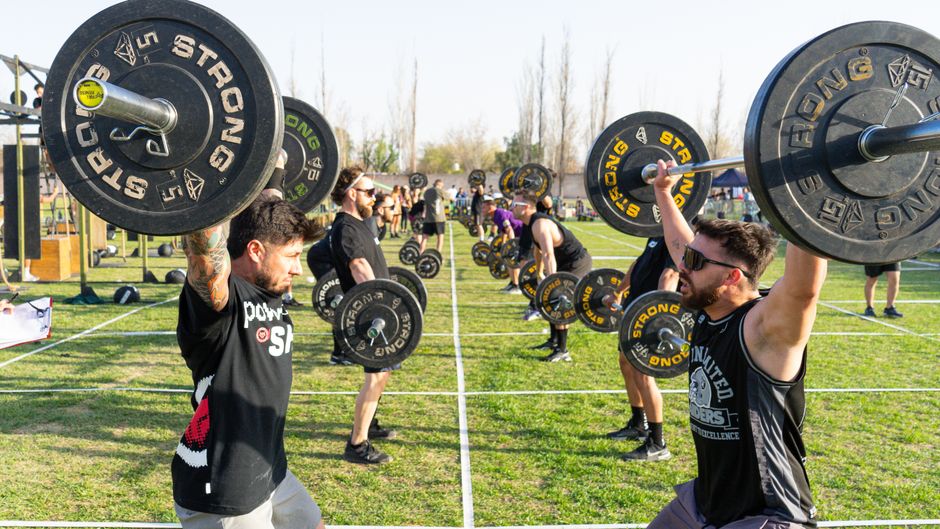
Getting Started: What This Program Is About
If you’re new to lifting and want to build real strength without a gym membership, a **strength training program for men beginners at home** is one of the most effective paths forward. You don’t need a room full of machines or a personal trainer standing over your shoulder. What you need is a smart plan, consistent effort, and the right foundational knowledge.
This guide walks you through everything — from setting up your space and choosing exercises to fueling your body and staying consistent. Each section builds on the last, so read it start to finish before you pick up your first weight.
—
Quick pick: Compare top-rated Mens Fitness options.
Equipment and Setup
Essential Strength Training Equipment for Beginners
You don’t need much to get started, but a few key pieces make a real difference. A set of **adjustable dumbbells** or a pair of fixed-weight dumbbells in the 10–40 lb range covers most beginner exercises. A **resistance band set** adds variety and is especially useful for warm-ups and accessory work.
A **pull-up bar** (the kind that fits in a doorframe) unlocks upper-body pulling movements that bodyweight alone can’t replicate. If your budget allows, a **flat weight bench** or a sturdy adjustable bench opens up pressing angles and seated exercises. Start minimal and add equipment as your strength demands more challenge.
- Adjustable dumbbells (10–40 lbs)
- Resistance bands (light, medium, heavy)
- Doorframe pull-up bar
- Flat or adjustable bench
- Non-slip exercise mat
Setting Up Your Home Gym Space
You need roughly a **6 x 8 foot clear area** to train safely — enough to lie down, extend your arms overhead, and step laterally. Good lighting reduces the chance of tripping or misjudging range of motion. If you’re in a basement or garage, a simple LED shop light makes a big difference.
**Ventilation matters more than most beginners realize.** Training in a hot, stuffy room spikes your heart rate faster, reduces endurance, and makes sessions feel harder than they are. A fan pointed at your training area or an open window keeps your core temperature manageable.
Safety Precautions for At-Home Workouts
Always **clear the floor of tripping hazards** — cables, shoes, and kids’ toys cause real injuries. Use a non-slip mat under your feet when pressing or squatting with dumbbells. If you’re going heavy on any overhead or pressing movement, never train to failure without a spotter or safety system in place.
- Keep a phone nearby in case of injury
- Warm up for 5–10 minutes before every session
- Never lift with a rounded lower back under load
- Learn how to safely drop weights if you lose control
—
Workout Plan Design
Principles of Effective Strength Training for Beginners
**Progressive overload** is the single most important principle in any strength program. That means gradually increasing the challenge — adding reps, sets, or weight — over time. Without progression, your muscles adapt and stop growing stronger.
Beginners respond well to **3 training days per week** with at least one rest day between sessions. This frequency allows enough stimulus for adaptation while giving your body time to recover. Consistency over weeks and months matters far more than any single perfect session.
Balancing Compound and Isolation Exercises
A well-designed beginner program is built around **compound movements** (exercises that use multiple joints and muscle groups) with a smaller portion devoted to **isolation work** (exercises targeting one muscle). A good starting ratio is roughly 70% compound, 30% isolation.
This balance builds overall strength efficiently while still giving attention to lagging muscle groups. For example, a session built around dumbbell rows and push-ups might finish with a set of bicep curls and lateral raises. The big lifts do the heavy lifting; the accessories fill the gaps.
Creating a Weekly Schedule
A classic **upper/lower split** works well for beginners training three days per week. You alternate between upper-body focused days and lower-body focused days, letting each muscle group recover before it’s trained again.
| Day | Focus | Example Exercises |
|---|---|---|
| Monday | Upper Body | Push-ups, dumbbell rows, overhead press |
| Wednesday | Lower Body | Goblet squats, Romanian deadlifts, lunges |
| Friday | Full Body or Upper | Pull-ups, dumbbell press, core work |
| Tue/Thu/Sat/Sun | Rest or light walk | Active recovery |
- Train 3 days per week with rest days in between
- Never train the same muscle group on back-to-back days
- Keep sessions to 45–60 minutes for optimal focus and recovery
—
Starting with Compound Exercises
Why Compound Movements Come First
**Compound exercises** recruit the most muscle mass in a single movement. For beginners, this means faster overall strength gains, more calories burned per rep, and better functional fitness that carries over into real-life activities. Mastering these movements early builds the foundation everything else sits on.
They also teach your nervous system how to coordinate multiple muscle groups working together — a skill that pays dividends for years. Skipping compound lifts in favor of isolation work is one of the most common beginner mistakes.
Key Compound Exercises for Beginners at Home
These five movements should form the core of your program. Each one targets multiple large muscle groups and can be scaled with resistance bands or dumbbells as you get stronger.
- **Push-up / Dumbbell Floor Press** — chest, shoulders, triceps
- **Dumbbell Romanian Deadlift** — hamstrings, glutes, lower back
- **Goblet Squat** — quads, glutes, core
- **Dumbbell Bent-Over Row** — upper back, biceps, rear delts
- **Overhead Dumbbell Press** — shoulders, triceps, upper traps
Form Cues for Safe Execution
For the **goblet squat**: hold a dumbbell vertically at your chest, feet shoulder-width apart, toes slightly out. Push your knees out over your toes as you descend, keeping your chest tall. Aim for a depth where your thighs are parallel to the floor — **3 sets of 8–12 reps** is a solid starting point.
For the **dumbbell row**: brace your core, hinge at the hips, and pull the dumbbell toward your hip — not your armpit. Squeeze your shoulder blade at the top for a full contraction. Never let your lower back round under the load.
**Beginner modification:** If a full push-up isn’t possible yet, start from your knees or elevate your hands on a bench to reduce the load. **Advanced progression:** Add a pause at the bottom of each rep or move to single-leg variations.
—
Accessory Isolation Exercises
Targeting Specific Muscle Groups
Once your compound work is done, **accessory exercises** help bring up individual muscles that compound lifts don’t fully address. Common targets for men include biceps, triceps, lateral deltoids, and calves. These aren’t vanity moves — stronger biceps improve your rows, and stronger triceps improve your press.
Accessory work also gives you a chance to train muscles through a fuller range of motion with lighter loads, which supports joint health over time. Think of it as fine-tuning the engine your compound lifts built.
Recommended Isolation Exercises
- **Dumbbell Bicep Curl** — 3 sets of 10–15 reps
- **Tricep Overhead Extension** — 3 sets of 12–15 reps
- **Lateral Raise** — 3 sets of 12–15 reps
- **Standing Calf Raise** — 3 sets of 15–20 reps
- **Face Pull with Resistance Band** — 3 sets of 15 reps
Form Tips for Isolation Work
For **dumbbell curls**: keep your elbows pinned at your sides throughout the movement. Avoid swinging the weight up with momentum — if you’re swinging, the weight is too heavy. Control the lowering phase for 2–3 seconds to maximize muscle tension.
For **lateral raises**: use a lighter weight than you think you need. Lead with your elbows, not your wrists, and stop when your arms are parallel to the floor. Going higher than parallel shifts stress onto the AC joint in your shoulder and increases injury risk.
—
Nutrition and Hydration
Macro Nutrition for Strength Training
Your body builds muscle from **protein**, fuels workouts with **carbohydrates**, and supports hormone production and joint health with **dietary fat**. As a beginner doing strength training, aim for roughly **0.7–1 gram of protein per pound of bodyweight** daily. A 180-lb man would target 126–180 grams of protein.
Don’t overcomplicate it early. Hit your protein target, eat mostly whole foods, and get enough total calories to support your training. Being in a significant calorie deficit while trying to build strength slows your progress considerably.
Pre and Post-Workout Nutrition
**Pre-workout (60–90 minutes before):** a moderate-carb, moderate-protein meal works well — think oatmeal with Greek yogurt or rice with chicken. This fuels your training session without making you feel heavy. Avoid high-fat meals immediately before training, as fat slows gastric emptying.
**Post-workout (within 1–2 hours):** prioritize protein to kickstart muscle repair. A protein shake with a banana, or a meal of eggs and potatoes, both work. The post-workout window matters, but it’s not as narrow as old-school gym culture suggested — total daily intake matters more.
- Protein target: 0.7–1g per pound of bodyweight
- Carbs before training for energy
- Protein after training for recovery
- Don’t skip meals on training days
Hydration During Home Workouts
**Dehydration reduces strength output** — even mild dehydration (1–2% of body weight) measurably impairs performance. Drink **16–20 oz of water** in the two hours before your session and sip steadily during your workout. On hot days or during intense sessions, consider adding an electrolyte packet to your water.
A practical rule: if your urine is pale yellow, you’re adequately hydrated. Dark yellow is a sign to drink more before you start training.
—
Recovery and Rest
Why Rest Days Are Non-Negotiable
**Muscle growth doesn’t happen during the workout — it happens afterward, during recovery.** When you lift, you create small micro-tears in muscle fibers. Rest days allow your body to repair those fibers stronger and thicker than before. Skipping rest days doesn’t speed up results; it slows them down and raises injury risk.
For a beginner training three days a week, you have four built-in recovery days. Use them. Light walking, stretching, or gentle mobility work on rest days is fine — just avoid anything that causes significant muscle fatigue in the same groups you just trained.
Effective Recovery Techniques
Some of the most effective recovery tools are also the simplest. **Sleep is the single most important recovery factor** — aim for 7–9 hours per night. During deep sleep, your body releases growth hormone and carries out the bulk of muscle repair.
- Prioritize 7–9 hours of sleep nightly
- Use foam rolling or a massage ball on sore muscle groups
- Cold showers or contrast therapy can reduce perceived soreness
- Stretching hip flexors and thoracic spine improves mobility over time
When to See a Healthcare Professional
Delayed onset muscle soreness (DOMS) — the ache you feel 24–48 hours after a tough session — is normal and expected. **Sharp, joint-based pain during a movement is not.** If you feel pain in your knees, lower back, shoulders, or elbows during an exercise, stop the movement and reassess your form.
If pain persists for more than a week, is localized to a joint rather than a muscle belly, or gets worse with rest, consult a sports medicine physician or physical therapist. Don’t train through joint pain hoping it resolves on its own — early intervention prevents minor issues from becoming chronic ones.
—
Motivation and Consistency
Staying Consistent When Motivation Fades
Motivation gets you started; **habit and structure keep you going.** Schedule your workouts at a fixed time each week — treat them like appointments you can’t cancel. Many beginners find morning sessions work best because life events are less likely to interrupt them before the day gets busy.
Another powerful consistency tool is **reducing friction**. Lay out your workout clothes the night before. Keep your equipment accessible, not stored in a closet. The easier it is to start, the more likely you are to follow through on days when motivation is low.
Tracking Progress and Setting Realistic Goals
Keep a simple **training log** — a notebook or a free app works fine. Record the exercises, sets, reps, and weights for every session. This data serves two purposes: it tells you when it’s time to increase the load, and it shows you how far you’ve come on days when progress feels invisible.
**Beginner strength gains in the first 3–6 months are often dramatic** due to neuromuscular adaptation — your nervous system gets more efficient at recruiting muscle fibers before the muscles themselves have grown much. Set a 12-week goal (like adding 15–20 lbs to your dumbbell row or completing unassisted pull-ups) and review your progress monthly.
Celebrating Milestones and Adjusting Your Plan
Every time you hit a new personal record, add a rep, or complete a workout you once found impossible — that’s a real win. **Acknowledge it.** Progress in strength training is non-linear; there will be plateaus and tough weeks. Recognizing small wins sustains the mindset needed to push through them.
After 8–12 weeks, your beginner program will likely need an update. You may need heavier weights, more weekly volume, or a new movement pattern to keep progressing. This is a sign of success, not failure — your body has adapted and is ready for more.
—
Frequently Asked Questions (FAQ)
Q: What is the best time of day to perform strength training exercises?
A: The best time is the time you’ll actually show up consistently. That said, **afternoon sessions (3–6 PM)** tend to align with peak body temperature and hormone levels, which can translate to slightly better performance. Morning workouts are equally valid if that’s what fits your schedule — just allow 10–15 minutes of extra warm-up time, since your joints and muscles are stiffer after sleep.
Q: How often should beginners be working out each week?
A: **Three days per week** is the sweet spot for most beginners. It provides enough training stimulus to drive adaptation while allowing sufficient recovery between sessions. Training more than four days per week as a beginner rarely produces faster results and significantly increases the risk of overtraining and burnout.
Q: Can I really build muscle and strength with just a few key exercises?
A: Absolutely. Research consistently shows that **5–6 well-chosen compound and accessory exercises** performed progressively over weeks and months produce substantial strength and muscle gains — especially for beginners. Volume and consistency matter far more than exercise variety. Master the fundamentals before adding complexity.
Explore more mens fitness guides on our site.
Top Product Recommendations
| Product Name | Rating | Key Feature | Est. Price | Action |
|---|---|---|---|---|
| Top-rated adjustable dumbbells for home gym | ★★★★★ | Editor-recommended adjustable dumbbells for home gym from this guide | $18–$42 | Check Lowest Price on Amazon |
| Best-value doorframe pull up bar | ★★★★☆ | Affordable doorframe pull up bar — strong everyday results | $12–$28 | Check Lowest Price on Amazon |
| Premium resistance bands set for strength training | ★★★★☆ | Higher-end resistance bands set for strength training for visible, lasting results | $45–$95 | Check Lowest Price on Amazon |
Affiliate Disclosure: This post contains affiliate links. We may earn a commission if you buy through our links, at no extra cost to you.
Leave a Reply