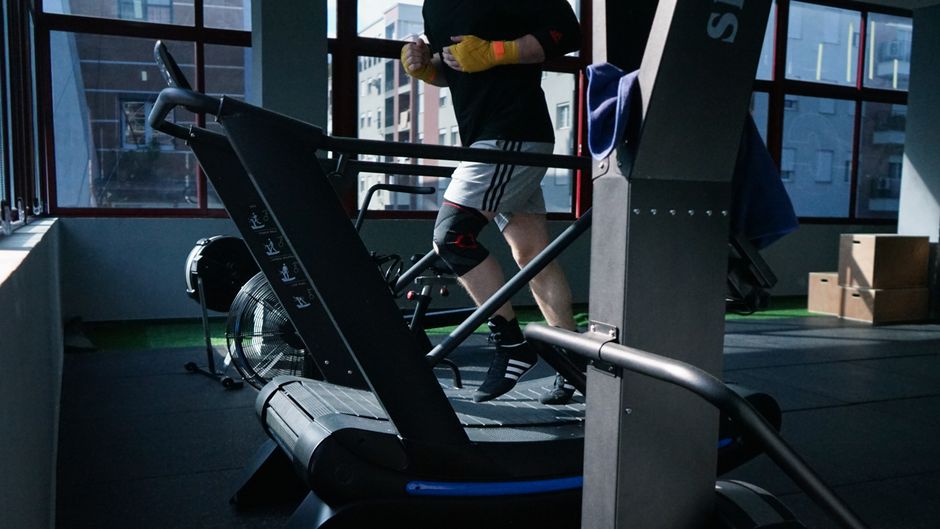
Warm-Up: Preparing Your Knees for Low Impact Cardio
Skipping your warm-up is one of the most common mistakes people with knee issues make. A proper warm-up gradually increases blood flow to the joint, lubricates cartilage, and reduces the risk of irritating already sensitive tissue. Give yourself at least 5–10 minutes before any **low impact cardio for bad knees at home** session.
Dynamic Stretching to Get the Joints Moving
- **Leg swings:** Stand near a wall for balance, swing one leg forward and back 10–15 times per side
- **Gentle knee circles:** While seated, lift one foot slightly and rotate the lower leg in small circles, 10 reps each direction
- **Ankle rolls:** Loosen the chain from the ground up — stiff ankles can shift load onto the knees
- **Hip flexor march:** Slow, high-knee marching in place for 30 seconds
These movements take your joints through their **range of motion** without loading them aggressively. Think of it as waking up the tissue, not stressing it. Keep movements smooth and controlled — no bouncing or jerking.
Gradually raise your heart rate by adding a slower version of your planned exercise at the end of the warm-up. If you plan to use a stationary bike, pedal at low resistance for 3–5 minutes before pushing the intensity. This transition matters more for people with knee pain than for healthy joints.
—
Quick pick: Compare top-rated Cardio options.
Main Workout: Best Low Impact Cardio Exercises for Bad Knees
Not all cardio is created equal when your knees are a limiting factor. The goal is to elevate your heart rate and build cardiovascular fitness while keeping compressive forces on the knee joint as low as possible. The exercises below are widely recommended by physical therapists and fitness coaches for exactly this reason.
Stationary Cycling
**Stationary bikes** are arguably the most knee-friendly cardio tool you can use at home. The circular pedaling motion avoids the jarring impact of running, and you control resistance precisely. Adjust your seat height so your knee has a slight bend — about 5–10 degrees — at the bottom of the pedal stroke. A seat that’s too low forces deep knee flexion on every rep.
- Beginner target: 15–20 minutes at low-to-moderate resistance, 3x per week
- Intermediate target: 30–45 minutes, moderate resistance, 4–5x per week
- Keep cadence between 60–80 RPM to reduce joint stress
Elliptical Machine Workouts
If you have access to an **elliptical trainer**, it mimics the walking and running motion while keeping your feet on the pedals at all times — zero impact. Research consistently shows that elliptical training produces significantly lower knee joint forces compared to treadmill running. Focus on a smooth, even stride and avoid locking out your knees at any point in the motion.
Pool and Water-Based Exercise
Water buoyancy dramatically reduces the load on your knees. **Water walking**, lap swimming, and aqua aerobics are exc nt options if you have pool access. Even walking in waist-deep water cuts effective body weight by roughly 50%, making it ideal for flare-up days when land-based exercise feels too uncomfortable.
- Swimming strokes like freestyle and backstroke are generally knee-friendly
- Avoid breaststroke if the frog-kick motion causes pain
- Water aerobics classes designed for older adults or rehabilitation are beginner-appropriate
—
Post-Workout: Stretching and Cool Down
Cooling down after cardio is just as important as warming up, especially for knees that are prone to inflammation. Your goal here is to bring your heart rate down gradually, prevent blood pooling, and address any tightness that developed during the session.
Static Stretches to Close Out Your Session
- **Standing quad stretch:** Hold for 30 seconds per side, use a wall if balance is an issue
- **Supine hamstring stretch:** Lie on your back, pull one leg toward your chest with a strap or towel
- **Calf stretch against a wall:** Tight calves pull on the back of the knee — don’t skip this one
- **Seated figure-four stretch:** Targets the hip external rotators, which support knee alignment
Hold each stretch for **20–30 seconds** and breathe steadily. Don’t push into sharp pain — mild tension is normal, sharp or stabbing sensation is not. End your cool down with 3–5 minutes of slow walking or easy pedaling to let your cardiovascular system normalize.
Ice or Heat Therapy After Exercise
If your knees feel warm or swollen after a workout, **ice therapy** for 15–20 minutes can help manage inflammation. Use a cloth barrier between the ice pack and skin. Heat is better used before exercise to loosen stiff joints, not after acute inflammation. If swelling persists beyond 24 hours, check in with a healthcare professional.
—
Strength Training for Knee Health
Cardio alone won’t protect your knees long-term. The muscles surrounding the joint — primarily the **quadriceps, hamstrings, and calves** — act as shock absorbers. Stronger surrounding muscles mean less stress on cartilage and ligaments during every step you take.
Key Exercises and Rep Ranges
| Exercise | Target Muscle | Beginner Sets/Reps | Advanced Sets/Reps |
|---|---|---|---|
| Mini squat (0–45°) | Quadriceps | 2 x 10 | 3 x 15 |
| Seated leg extension (light) | Quadriceps | 2 x 12 | 3 x 15 |
| Standing hamstring curl | Hamstrings | 2 x 10 | 3 x 15 |
| Calf raise | Calves/Gastrocnemius | 2 x 15 | 3 x 20 |
| Clamshell with band | Hip abductors | 2 x 12 per side | 3 x 15 per side |
**Resistance bands** are ideal for home-based knee strengthening. They provide progressive resistance without heavy axial loading on the joint. Light dumbbells work well for calf raises and step-based movements. Always prioritize form over load — a slow, controlled movement with light resistance does more good than sloppy reps with heavy weight.
Form Cues to Protect the Knee
- During any squat or lunge variation, keep your **knee tracking over your second toe** — never caving inward
- Avoid letting the knee travel significantly past the toes on exercises like step-ups
- Engage your core before each rep to stabilize the pelvis and reduce compensatory patterns
If pain increases during any strength exercise — not just mild discomfort, but sharp or worsening pain — stop that movement and consult a physical therapist before continuing.
—
Recovery and Rest Days
Rest is not the enemy of progress. For people managing knee pain, **strategic recovery** is what allows the joint to adapt and get stronger over time. Training through persistent pain almost always makes the underlying issue worse.
How to Structure Your Week
- Aim for **2–3 rest or active recovery days** per week when starting out
- Active recovery means gentle walking, light stretching, or yoga — not another full cardio session
- Alternate harder cardio days with strength days to prevent cumulative joint stress
Listening to your body is a skill, not a cliché. Soreness in the muscles the day after a workout is normal. **Soreness or swelling in the knee joint itself** is a signal to pull back. There’s an important difference between post-exercise muscle fatigue and joint irritation, and learning to recognize that difference will keep you training consistently over the long run.
Sleep is also a major recovery factor that gets underestimated. Most tissue repair happens during deep sleep stages. If you’re pushing cardio sessions regularly on 5–6 hours of sleep, your recovery will lag and inflammation markers tend to stay elevated.
—
Nutrition for Joint Health
What you eat has a measurable impact on joint inflammation and cartilage health. You don’t need a complicated diet overhaul — focusing on a few high-leverage nutritional habits can make a real difference in how your knees feel during and after exercise.
Foods That Support Joint Health
- **Omega-3 fatty acids:** Found in salmon, sardines, walnuts, and flaxseed — these directly reduce inflammatory markers in the body
- **Colorful vegetables and fruits:** Berries, leafy greens, and bell peppers provide antioxidants that help neutralize exercise-induced oxidative stress
- **Bone broth and collagen-rich foods:** Provide the amino acids that support cartilage maintenance
- **Turmeric and ginger:** Both have well-researched anti-inflammatory properties and work well in smoothies, teas, or cooking
What to Limit
- Processed foods high in refined sugar and seed oils tend to promote systemic inflammation
- Excess alcohol can interfere with sleep quality and recovery
- Ultra-processed snacks often spike blood sugar and contribute to inflammatory load over time
**Hydration** is non-negotiable for joint health. Synovial fluid — the lubricant inside your knee joint — depends on adequate hydration to maintain its consistency. Aim for at least **8 cups of water per day**, and more on days when you’re actively exercising. If you’re eating a reasonably whole-food diet but still dealing with significant joint inflammation, a conversation with your doctor about anti-inflammatory strategies is worth having.
—
Final Tips and Staying Motivated
Building a consistent low impact cardio routine at home when you’re dealing with knee pain takes patience. The progress is real, but it’s rarely linear. Some weeks you’ll feel stronger and more capable; others, a flare-up will force you to scale back. Both are part of the process.
Setting Realistic Expectations
- Don’t measure success by comparing your workouts to people without knee limitations
- A 20-minute stationary bike session done consistently beats an ambitious 60-minute session that leaves you sidelined for a week
- **Track your workouts** — even basic notes on duration, intensity, and how your knees felt afterward help you spot patterns and build confidence
Celebrate incremental wins. Going from zero consistent exercise to three sessions per week is a massive achievement for joint health and cardiovascular fitness. Improved **sleep quality, energy levels, and reduced stiffness** are early signs that your routine is working, even before the scale or fitness metrics change dramatically.
Consistency matters more than intensity at this stage. The research on cardiovascular health and longevity consistently shows that **moderate, regular activity** produces the most durable outcomes — not heroic efforts followed by long breaks. Pair your cardio routine with the strength work and recovery habits outlined above, and you’re building a sustainable system that supports your knees for the long haul.
—
Frequently Asked Questions (FAQ)
Q: Can I do cardio with bad knees?
A: Yes — **low impact cardio options like stationary cycling, elliptical training, and water exercise** can improve cardiovascular health without placing excessive compressive force on the knee joint. That said, it’s worth consulting a physical therapist or healthcare provider to get guidance specific to your diagnosis, since conditions like osteoarthritis, meniscus tears, and patellofemoral syndrome each respond differently to exercise.
Q: How often should I do low impact cardio for bad knees?
A: A good starting target is **3–5 sessions per week of 20–30 minutes** at moderate intensity. Build up gradually — start with 3 days and shorter sessions, then increase duration before you increase frequency. The American Heart Association recommends at least 150 minutes of moderate-intensity cardio per week, and low impact formats absolutely count toward that goal.
Q: What signs mean I should stop exercising and rest my knees?
A: Stop your session and rest if you experience **sharp or stabbing knee pain, sudden swelling, a feeling of the knee giving way, or pain that worsens as the workout continues**. Mild muscular fatigue and low-level joint achiness that resolves within an hour post-workout is generally normal. Persistent swelling, pain that lingers more than 24 hours, or any change in how the knee moves or feels should be evaluated by a healthcare professional before you continue training.
Top Product Recommendations
| Product Name | Rating | Key Feature | Est. Price | Action |
|---|---|---|---|---|
| Top-rated stationary bike for bad knees home use | ★★★★★ | Editor-recommended stationary bike for bad knees home use from this guide | $18–$42 | Check Lowest Price on Amazon |
| Best-value resistance bands for knee strengthening… | ★★★★☆ | Affordable resistance bands for knee strengthening… — strong everyday results | $12–$28 | Check Lowest Price on Amazon |
| Premium elliptical machine for home use low impact | ★★★★☆ | Higher-end elliptical machine for home use low impact for visible, lasting results | $45–$95 | Check Lowest Price on Amazon |
Affiliate Disclosure: This post contains affiliate links. We may earn a commission if you buy through our links, at no extra cost to you.
Leave a Reply