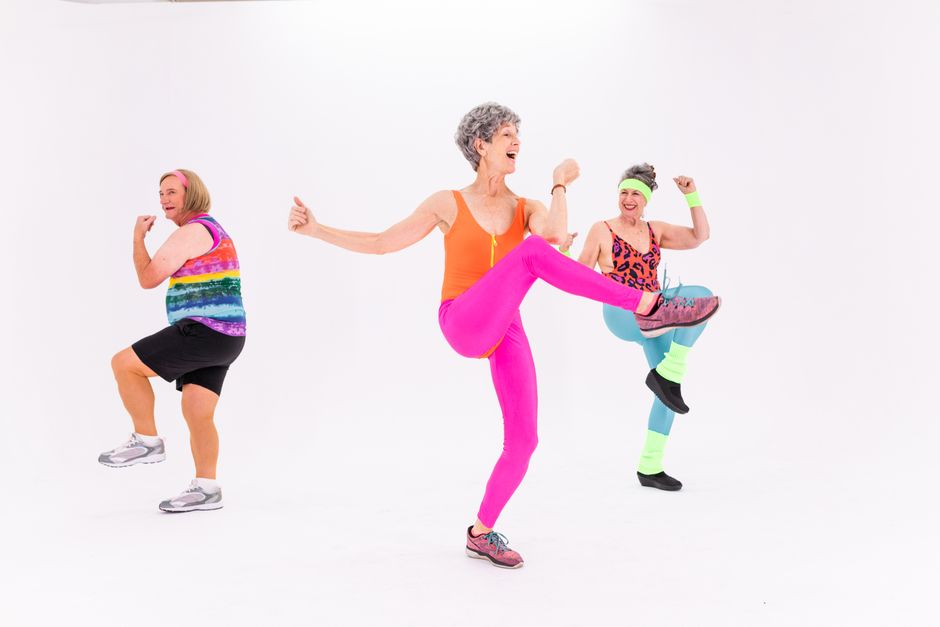
Why Women Over 40 Need a Smarter Fitness Approach
Staying active after 40 is one of the best investments you can make in your long-term health. A solid **home workout plan for women over 40 no equipment** removes every barrier — no gym membership, no commute, no intimidating machines. You work on your schedule, in your space, at your pace.
After 40, the body goes through real shifts: **muscle mass naturally declines**, metabolism slows, and hormonal changes can affect energy, sleep, and recovery. These aren’t reasons to slow down — they’re reasons to train smarter. Consistency with the right routine helps maintain bone density, balance hormones, and protect joint health.
This guide gives you a full, structured plan built around bodyweight movement, realistic expectations, and modifications for every fitness level. Whether you’re returning after a long break or just getting started, this plan meets you where you are.
—
Quick pick: Compare top-rated Womens Fitness options.
Warm-Up and Stretching: Start Every Session Right
Skipping your warm-up is one of the most common mistakes women make, especially after 40 when joints and connective tissue need more time to prepare. A proper warm-up raises your core temperature, increases blood flow to working muscles, and primes your nervous system for movement. **Never skip it.**
**Dynamic stretching** — movement-based stretches that take joints through their full range of motion — is the gold standard for warm-ups. Unlike holding a static stretch cold, dynamic movements prepare the body without reducing muscle activation.
Recommended Warm-Up Routine (5–7 minutes)
- **Arm circles** — 10 forward, 10 backward
- **Leg swings** — 10 per leg, front-to-back and side-to-side
- **Hip circles** — 10 each direction
- **March in place** — 60 seconds with high knees
- **Torso rotations** — 10 slow, controlled reps per side
- **Ankle rolls** — 10 circles each foot
- **Bodyweight squats (slow)** — 8 reps as a movement primer
Move through these with intention, not speed. The goal is mobility and activation, not fatigue. If you have any existing hip, knee, or shoulder concerns, consult a healthcare professional before beginning a new exercise routine.
—
Cardiovascular Exercises: Keep Your Heart Strong at Home
Cardio doesn’t require a treadmill, a bike, or a 5K race. For women over 40, **low-impact and moderate-intensity cardio** is particularly effective because it supports heart health, calorie burn, and mood without punishing your joints. The American Heart Association recommends at least 150 minutes of moderate cardio per week — that’s just 30 minutes, five days.
The key is elevating your heart rate consistently. You don’t need to go all-out. Aim for a pace where you can still hold a conversation but feel your breathing increase — that’s your **moderate-intensity zone**.
Beginner Home Cardio Routine (20 minutes)
- **March in place** — 2 minutes
- **Step touches side to side** — 2 minutes
- **Modified jumping jacks** (step out instead of jumping) — 90 seconds
- **Low-impact skaters** — 90 seconds
- **Knee lifts with arm drive** — 2 minutes
- **Rest** — 60 seconds
- **Repeat circuit once more**
As your fitness improves, increase intensity by adding a light hop to movements or reducing rest time. **Progression is gradual** — add no more than 10% intensity or duration per week to avoid overuse injuries. Walking up and down stairs, dancing in your living room, or brisk walking outside all count toward your weekly cardio goal.
—
Strength Training Exercises: Build and Preserve Muscle
Strength training is non-negotiable for women over 40. After 35, women lose roughly **3–8% of muscle mass per decade** without resistance training — a process called sarcopenia. Preserving and building lean muscle keeps your metabolism active, protects your bones, improves posture, and makes everyday tasks easier.
Bodyweight training is highly effective, especially when you focus on **time under tension** — slowing down each rep so muscles work harder without added load. You don’t need dumbbells to get a serious strength workout.
Beginner Bodyweight Strength Routine (3 days/week, non-consecutive)
| Exercise | Sets | Reps | Rest |
|---|---|---|---|
| Bodyweight squat | 3 | 12–15 | 45 sec |
| Modified push-up (knees) | 3 | 8–12 | 45 sec |
| Glute bridge | 3 | 12–15 | 30 sec |
| Reverse lunge | 3 | 10 per leg | 45 sec |
| Superman hold | 3 | 10 reps, 3-sec hold | 30 sec |
| Standing side hip abduction | 2 | 15 per side | 30 sec |
**Advanced modification:** Slow the tempo — try a 3-second lower on squats and push-ups. Add a pause at the bottom of glute bridges. Once 15 reps feel easy, progress to single-leg variations like single-leg glute bridges or Bulgarian split squats using a chair.
**Beginner modification:** Reduce reps to 6–8, use a chair for balance support on lunges, and take longer rest periods of 60–90 seconds. Form always takes priority over rep count.
—
Flexibility and Balance Exercises: Protect Your Joints and Prevent Falls
Flexibility and balance training are often the most overlooked parts of a fitness routine — and for women over 40, they’re arguably the most important. **Falls are the leading cause of injury** in adults over 40, and improved balance directly reduces that risk. Flexibility work keeps muscles supple, reduces chronic tightness, and supports healthy posture.
You don’t need a yoga studio or special mat to work on these. A clear patch of floor is enough. Even 10–15 minutes of focused flexibility and balance work three times per week produces measurable improvements within a few weeks.
Sample Flexibility and Balance Routine (10–15 minutes)
- **Standing single-leg balance** — 30 seconds each side (use a wall if needed)
- **Seated hamstring stretch** — 30-second hold per leg
- **Kneeling hip flexor stretch** — 30 seconds per side
- **Figure-four piriformis stretch** — 30 seconds per side
- **Cat-cow spinal mobility** — 10 slow cycles
- **Heel-to-toe walk** (like a tightrope) — 10 steps forward, 10 back
- **Standing quad stretch** — 30 seconds per leg
For balance exercises, **progress by reducing support** — start near a wall, then fingertip touch, then freestanding. **Yoga and Pilates** are exc nt structured options that develop both flexibility and balance simultaneously. If you experience chronic joint pain or have a history of falls, talk to your doctor or a physical therapist before increasing intensity.
—
Cool-Down and Stretching: End Every Workout with Intention
The cool-down is where your body shifts from exertion back to rest. Ending a workout abruptly can cause blood to pool in your lower extremities, leading to dizziness or discomfort. A proper cool-down also signals your nervous system to begin the recovery process and helps reduce **delayed onset muscle soreness (DOMS)**.
For women over 40, recovery takes slightly longer than it did in your 20s. Honoring your cool-down isn’t optional — it’s part of the workout. Budget at least 5–10 minutes for it.
Post-Workout Static Stretching Routine (5–10 minutes)
- **Standing forward fold** — hold 30–45 seconds, breathe deeply
- **Chest opener** (clasp hands behind back, lift) — 30 seconds
- **Seated spinal twist** — 30 seconds each side
- **Lying knee-to-chest** — 30 seconds per leg
- **Child’s pose** — 45–60 seconds
- **Supine butterfly stretch** — 45 seconds
- **Diaphragmatic breathing** — 5 slow, deep breaths to close
Static stretches held for **20–45 seconds** after a workout (never cold) improve flexibility over time and reduce muscle tension. Focus on the muscle groups you worked hardest — if it was a lower body day, prioritize hip flexors, hamstrings, and glutes.
—
Staying Motivated and Consistent: Making the Plan Stick
The most effective workout plan is the one you actually follow. Motivation gets you started, but **habit and structure** keep you going. Women over 40 often juggle careers, family, and personal responsibilities — which makes a simple, low-friction routine at home especially valuable.
One of the most evidence-backed strategies for consistency is **habit stacking** — attaching your workout to an existing daily routine. Work out right after your morning coffee, during a lunch break, or immediately after dropping kids at school. When exercise connects to an anchor habit, it requires far less willpower to begin.
Practical Tips for Long-Term Consistency
- **Schedule workouts like appointments** — put them on your calendar with a start time
- **Start with 3 days per week** — build the habit before adding frequency
- **Keep a simple workout log** — even a sticky note on the fridge counts
- **Celebrate non-scale victories** — improved energy, better sleep, climbing stairs easily
- **Prep your space the night before** — lay out your mat or clear your floor
- **Find an accountability partner** — a friend, online group, or fitness app community
- **Give yourself a 5-minute rule** — commit to just 5 minutes; you’ll almost always finish the full session
**Setting realistic goals** matters enormously after 40. Expecting dramatic transformation in two weeks leads to disappointment. Expect to feel stronger, sleep better, and have more energy within **4–6 weeks** of consistent training. Visible body composition changes typically take 8–12 weeks. That timeline is worth it.
Track your progress by noting how many reps you completed, how a movement felt, or whether you needed fewer rest breaks. **Progress is progress**, no matter how small it looks.
—
Frequently Asked Questions (FAQ)
Q: How often should I work out if I’m over 40?
A: Aim for **4–5 days per week** total — a mix of 2–3 strength sessions and 2 cardio or flexibility days. Beginners should start with 3 days and build gradually. Rest days are essential for recovery, especially after 40 when the body needs slightly more time to repair muscle tissue.
Q: Can I modify these exercises if I’m a beginner or have joint issues?
A: Absolutely. Every exercise in this plan has a modification. Use a chair for balance support on lunges, perform push-ups on your knees, and reduce rep counts until your form is solid. If you have a diagnosed joint condition, injury history, or chronic pain, consult a healthcare professional or physical therapist before starting — they can tailor modifications specifically for you.
Q: How long should my home workouts be?
A: **30–45 minutes** is the ideal target for most women over 40. That’s enough time for a warm-up, a focused strength or cardio block, and a cool-down. If time is tight, even a focused 20-minute session is far better than skipping. Quality of movement and consistency over time matter far more than workout length.
Top Product Recommendations
| Product Name | Rating | Key Feature | Est. Price | Action |
|---|---|---|---|---|
| Top-rated non-slip yoga mat for women | ★★★★★ | Editor-recommended non-slip yoga mat for women from this guide | $18–$42 | Check Lowest Price on Amazon |
| Best-value resistance bands for women over 40 | ★★★★☆ | Affordable resistance bands for women over 40 — strong everyday results | $12–$28 | Check Lowest Price on Amazon |
| Premium fitness journal workout log book | ★★★★☆ | Higher-end fitness journal workout log book for visible, lasting results | $45–$95 | Check Lowest Price on Amazon |
Affiliate Disclosure: This post contains affiliate links. We may earn a commission if you buy through our links, at no extra cost to you.
답글 남기기