Getting Started with Strength Training at Home
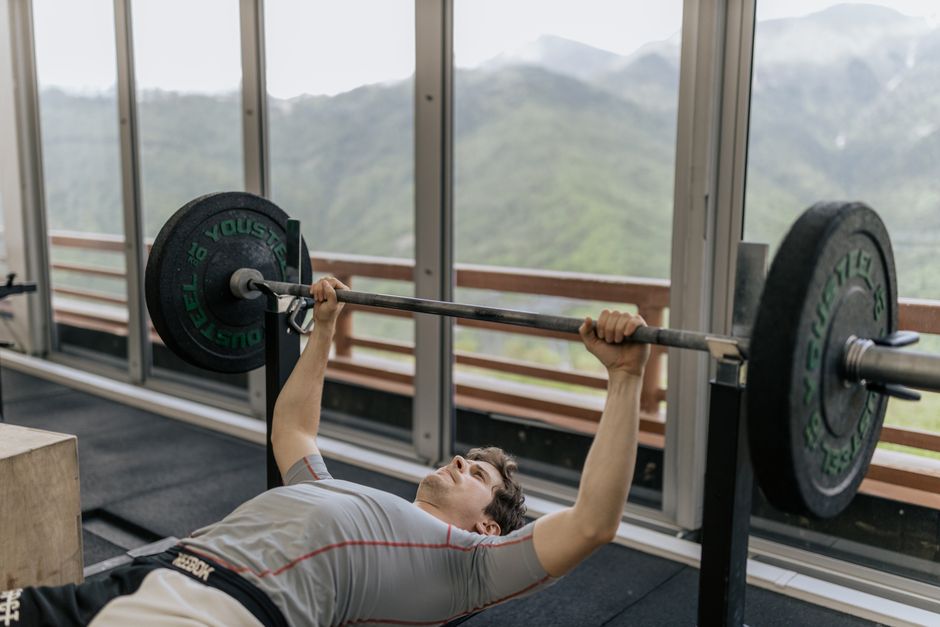
Starting a **strength training program for men beginners at home** is one of the smartest investments you can make in your long-term health. Research consistently shows that resistance training builds muscle, improves metabolism, strengthens bones, and lowers the risk of chronic disease. You don’t need a gym membership or expensive equipment to see real results.
Before your first session, set **specific, realistic goals**. Are you aiming to build visible muscle, lose body fat, improve functional strength, or all three? Writing down a 3-month target — like completing 10 full push-ups or training three times per week — gives you something measurable to chase. Vague goals produce inconsistent effort.
Most beginners do well with **two to three full-body sessions per week**, with at least one rest day between workouts. This frequency lets your muscles recover and grow while building a habit you can actually sustain.
—
Quick pick: Compare top-rated Mens Fitness options.
Essential Equipment for Home Strength Workouts
You don’t need a fully stocked gym to get strong. A few **key pieces of gear** cover the majority of beginner exercises effectively. Start minimal and add equipment as you progress rather than buying everything upfront.
- **Adjustable dumbbells** — the most versatile investment; wide weight range without much floor space
- **Resistance bands** — ideal for warm-ups, accessory work, and variable tension
- **Exercise mat** — essential for floor work, core training, and stretching
- **Adjustable bench** — opens up chest press and incline variations; helpful but optional
- **Stability ball** — useful for core activation and seated press work
If budget is tight, **a set of resistance bands and a pair of moderate dumbbells (15–30 lbs)** is enough to run a complete program for several months. Upgrade to adjustable dumbbells once you consistently hit the top of your current weight range.
| Equipment | Beginner Priority | Space Needed | Cost Range |
|---|---|---|---|
| Resistance bands | High | Minimal | $15–$40 |
| Fixed dumbbells (pair) | High | Low | $30–$80 |
| Adjustable dumbbells | High | Low | $100–$350 |
| Exercise mat | High | Minimal | $20–$60 |
| Adjustable bench | Medium | Moderate | $80–$200 |
| Stability ball | Low | Moderate | $20–$40 |
—
Warm-Up and Mobility Before You Lift

Skipping your warm-up is one of the fastest ways to get injured, especially when you’re new to lifting. A **proper warm-up raises your core temperature**, increases blood flow to working muscles, and prepares your joints for load. Budget 8–10 minutes before every session.
Focus on **dynamic stretching** rather than static holds before lifting. Leg swings, arm circles, hip circles, and walking lunges keep you moving while loosening key muscle groups. Save static stretching (holding 30+ seconds) for your cool-down.
Include these mobility drills before any lower-body or full-body session:
- Hip 90/90 stretch — 60 seconds per side
- Bodyweight squat holds — 10 slow reps, pausing at the bottom
- Cat-cow spinal movement — 10 reps
- Thoracic rotation in quadruped — 8 reps per side
- Ankle circles and calf raises — 15 reps each
—
Building Your Beginner Strength Routine
A solid beginner program hits all **major muscle groups** — chest, back, shoulders, legs, and arms — across two to three sessions per week. Full-body workouts outperform split routines at this stage because they train each muscle more frequently while still allowing adequate recovery. For more structured guidance on building your weekly schedule, browse the men’s fitness training resources on this site.
**Sample beginner workout (3x per week, full body):**
- **Goblet squat** — 3 sets × 10–12 reps
- **Push-up or dumbbell chest press** — 3 sets × 8–12 reps
- **Dumbbell Romanian deadlift** — 3 sets × 10 reps
- **Dumbbell row** — 3 sets × 10 reps per arm
- **Overhead dumbbell press** — 3 sets × 10 reps
- **Dumbbell bicep curl** — 2 sets × 12 reps
- **Tricep dips or overhead extension** — 2 sets × 12 reps
- **Plank hold** — 3 sets × 20–40 seconds
**Key form cues to prioritize:**
- Squats: keep your chest tall and knees tracking over your toes — never let them cave inward
- Rows: drive your elbow back and squeeze your shoulder blade at the top; avoid shrugging
- Overhead press: brace your core and resist arching your lower back as the weight rises
Rest **60–90 seconds between sets**. This gives your muscles enough recovery to maintain quality form while keeping the session under an hour.
—
Progressive Overload: How to Keep Getting Stronger
**Progressive overload** is the most important principle in strength training. It means consistently increasing the challenge — through more weight, more reps, or shorter rest — so your muscles keep adapting. Without it, progress stalls within weeks.
A practical beginner rule: when you can complete all prescribed reps with **good form across all three sets**, increase the weight by the smallest available increment (typically 5 lbs for dumbbells). Small jumps compound into significant strength gains over months.
Change up your routine every **6–8 weeks** to prevent adaptation. You don’t need a full overhaul — swap a goblet squat for a split squat, or replace a flat press with an incline variation. **Log every session** in a notebook or app; it’s the only reliable way to confirm you’re actually progressing.
- Record weight, sets, and reps for every workout
- Note how each set felt — easy, hard, or failed on the last rep
- Review every four weeks and adjust load or volume based on the data
—
Nutrition and Hydration for Muscle Growth
No training program outworks poor nutrition. To support **muscle growth and recovery**, you need enough total calories — most beginners underestimate how much food consistent training demands. A general starting point for men building muscle is **bodyweight (in lbs) × 16–18 calories per day**, adjusted based on your results.
**Protein is the top priority.** Aim for **0.7–1 gram of protein per pound of bodyweight** daily. Reliable sources include eggs, Greek yogurt, chicken breast, canned tuna, cottage cheese, and lean beef. If hitting your protein target through whole foods is a challenge, a basic whey or plant-based protein powder is a practical addition.
Don’t overlook **carbohydrates and healthy fats**:
- Carbs fuel your workouts and replenish muscle glycogen — oats, rice, potatoes, and fruit are solid choices
- Healthy fats support hormone production, including testosterone — prioritize avocado, nuts, olive oil, and fatty fish
- Eat a **meal with protein and carbs within 1–2 hours after training** to support recovery
For hydration, aim for **at least half your bodyweight in ounces of water per day** — more if you’re training hard and sweating heavily. Dehydration measurably impairs both strength output and recovery speed.
—
Staying Consistent and Motivated Long-Term
Consistency beats intensity every time — especially for beginners. The men who make the most progress aren’t the ones training the hardest in January; they’re the ones still showing up in July. **Building a sustainable habit** is the real goal of your first three months.
Set both short-term and long-term targets. A short-term win might be completing all three scheduled workouts in a given week; a longer goal could be hitting a bodyweight squat for 10 clean reps by month three. Small wins build momentum. Exploring a broader men’s fitness and wellness routine can also help you layer in recovery and mobility habits that keep training sustainable.
Accountability makes a real difference:
- Find a **workout partner** — even a remote one you check in with via text
- Join a **fitness community** (subreddit, Facebook group) where beginners share progress
- Schedule workouts in your calendar like appointments you can’t cancel
- Track a **workout streak** — the psychological pull of not breaking one is genuinely effective
Celebrate real milestones. Hit 20 consecutive workouts? Acknowledge it. Graduated from band-only to dumbbell exercises? That’s measurable, earned progress.
—
Avoiding Common Beginner Mistakes and Injuries
Beginners are most vulnerable to two opposing errors: **doing too little** (undertraining, no progression) and **doing too much** (overtraining, getting hurt). Both stall results. The goal is consistent, progressive effort with adequate recovery built in.
**Signs you may be overtraining:**
- Persistent soreness that doesn’t resolve with rest
- Decreasing strength or performance across multiple sessions
- Sleep disruption, irritability, or low motivation
- Elevated resting heart rate
**Improper form** is the leading cause of beginner injuries. Never trade technique for heavier weight. If your form breaks down on rep 8, the weight is too heavy — drop it 10–15% and rebuild from there. Occasionally filming yourself is a practical way to catch form errors you can’t feel in the moment.
Know when to **consult a healthcare professional**. Sharp joint pain, pain persisting more than a week, or any injury involving a pop or snap should be evaluated by a doctor or physical therapist before you resume training. Muscle soreness is normal; sharp or lingering pain is a signal worth taking seriously.
- Take **at least one full rest day** between strength sessions
- Sleep **7–9 hours per night** — muscle repair happens during sleep, not during the workout
- Use **deload weeks** every 4–6 weeks — reduce volume by roughly 40% to let your body fully recover
—
Frequently Asked Questions (FAQ)
Q: What is the best time of day to do strength training?
A: The best time is whichever slot you’ll stick to consistently. Research suggests **late afternoon to early evening (4–7 PM)** may offer a small performance edge due to higher body temperature and testosterone levels. Morning workouts are equally effective if that fits your schedule — habit consistency matters more than timing.
Q: How often should beginners do strength training workouts?
A: **Two to three full-body sessions per week** is the proven starting point. This frequency stimulates adaptation while providing enough rest for recovery. Avoid training the same muscle groups on back-to-back days. After 2–3 months of consistent training, you can consider moving to a 4-day upper/lower split.
Q: Can I really build muscle and strength at home without a gym?
A: Yes — with a structured program and progressive overload, **meaningful muscle and strength gains are achievable at home**. Dumbbells, resistance bands, and bodyweight exercises provide ample stimulus for beginners and intermediate trainees. The main limitation appears much later, when very heavy loads are needed for continued progress — typically after 12–18 months of consistent training, not at the start.
Q: How long before I see results from a home strength training program?
A: Most beginners notice **improved strength and endurance within 3–4 weeks**, driven largely by neuromuscular adaptations (your nervous system learning to recruit muscle more efficiently). Visible muscle changes typically emerge around **8–12 weeks** with consistent training and adequate protein intake. Realistic expectations and patience matter here — sustainable progress takes months, not days.
Q: Do I need protein supplements to build muscle as a beginner?
A: No — **whole food protein sources are sufficient** for most beginners. Eggs, chicken, Greek yogurt, tuna, and lean beef can cover your daily protein target without supplementation. A whey or plant-based protein powder is a convenient option if you consistently fall short of your daily goal, but it’s a supplement to a solid diet, not a replacement for one.
Top Product Recommendations
| Product Name | Rating | Key Feature | Est. Price | Action |
|---|---|---|---|---|
| Top-rated adjustable dumbbells for home gym | ★★★★★ | Editor-recommended adjustable dumbbells for home gym from this guide | $18–$42 | Check Lowest Price on Amazon |
| Best-value resistance bands set for men | ★★★★☆ | Affordable resistance bands set for men — strong everyday results | $12–$28 | Check Lowest Price on Amazon |
| Premium adjustable weight bench for home | ★★★★☆ | Higher-end adjustable weight bench for home for visible, lasting results | $45–$95 | Check Lowest Price on Amazon |
Affiliate Disclosure: This post contains affiliate links. We may earn a commission if you buy through our links, at no extra cost to you.
Leave a Reply