
If your knees ache every time you try to exercise, you’re not alone — and you don’t have to sit on the sidelines. **Low impact cardio for bad knees at home** lets you elevate your heart rate, burn calories, and build endurance without the pounding stress of running or jumping. These workouts are designed for real people navigating knee discomfort, arthritis, or post-injury recovery. You can do them in your living room, at your own pace, with zero equipment required.
Why Low Impact Cardio Is the Smart Move for Bad Knees
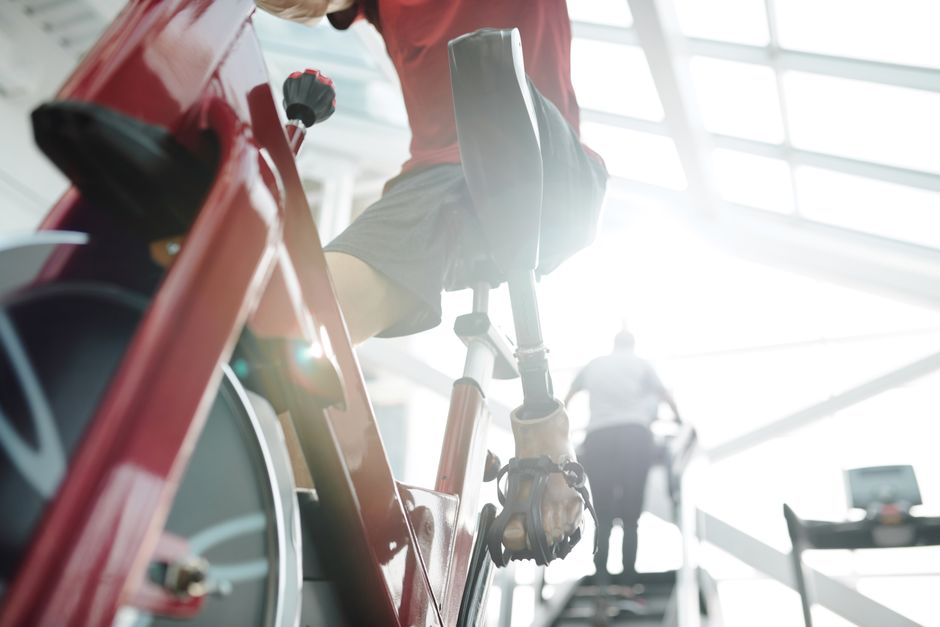
High-impact movements like jumping jacks or running send a force equal to **three to five times your body weight** through your knee joints with every single contact. For anyone with osteoarthritis, patellar tendinitis, or post-surgical knees, that cumulative load accelerates wear and increases pain. Low impact cardio keeps at least one foot on the ground at all times, dramatically reducing joint stress without sacrificing cardiovascular benefit.
Research consistently shows that **150 minutes of moderate-intensity cardio per week** improves heart health, supports healthy weight management, and reduces systemic inflammation — all of which take pressure off your knees over time. Low impact is not a compromise. For many people, it’s the most sustainable long-term strategy available.
Regular movement also pumps synovial fluid through the joint, which lubricates cartilage and eases morning stiffness. Consistent, gentle motion is often more therapeutic than complete rest, which can actually stiffen things further.
Quick pick: Compare top-rated Cardio options.
Warm-Up & Posture: Set Yourself Up for Success
Never skip the warm-up. Cold muscles and stiff joints are the fastest route to a flare-up. Spend **at least 5 minutes** preparing your body before any cardio work:
- **Leg swings:** Hold a wall, swing each leg forward and back 10 times to mobilize the hip and knee together.
- **Ankle circles:** Seated or standing, rotate each ankle 10 times in each direction.
- **Marching in place:** Lift knees gently to hip height for 60 seconds to elevate heart rate gradually.
- **Small knee bends:** Feet shoulder-width apart, bend 20–30 degrees — not a full squat — to warm up the quad and knee joint.
- **Gentle toe taps:** Alternate tapping toes forward on the floor to activate the shin muscles.
Posture matters as much as the movement. Stand tall with a **neutral spine**, level pelvis, and lightly engaged core. Avoid locking your knees at any point — a micro-bend protects the joint. If you’re seated, sit toward the front edge of the chair with feet flat on the floor. A proper warm-up prepares the joint for movement and significantly reduces post-workout soreness.
Your Core Low Impact Cardio Exercise Menu
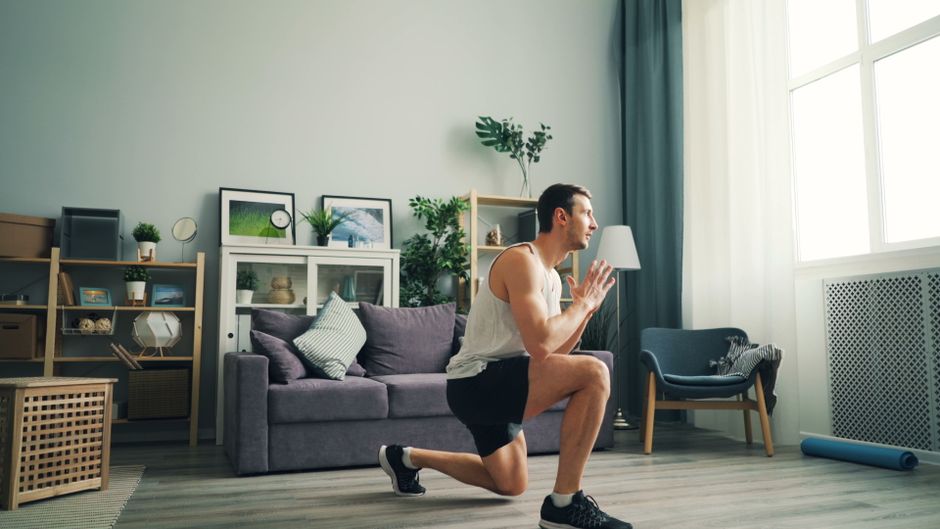
These five movements form the backbone of your at-home routine. Each can be performed seated or standing depending on your current ability level. This selection covers the full range of cardio exercises that protect your joints while keeping your heart rate up.
- **Seated or standing marches:** Alternate lifting knees toward your chest. The standing version elevates heart rate faster; the seated version removes virtually all knee load.
- **Heel taps:** Alternate tapping your heel forward on the floor. Focus on a light, controlled contact — no stomping or slamming.
- **Standing or seated knee raises:** Lift one knee, hold for 1 second, lower with control. Avoid swinging the leg; control is the key ingredient here.
- **Side leg lifts:** Standing or side-lying, raise one leg out to the side to hip height. This engages the glute med and stabilizes the knee from the side.
- **Calf raises:** Rise onto the balls of both feet, lower slowly. Use a chair back for balance. Strengthens the posterior chain and supports knee stability from below.
**Duration target:** 30 seconds of work per exercise, 15 seconds of rest or gentle walking in place between sets. This interval ratio keeps intensity manageable while maintaining an elevated heart rate throughout.
Proper Form: Protect the Joint Every Rep
Form breaks down when people get tired — and that’s exactly when knee injuries happen. Keep these cues front of mind throughout every set.
- **Never lock the knee.** A slight bend (5–10 degrees) at the end range of all standing exercises keeps load off the joint capsule.
- **Control the descent.** Whether lowering a leg lift or coming down from a calf raise, the eccentric (lowering) phase should take at least 2 seconds.
- **Keep movements small before making them big.** Reduce range of motion until you feel confident, then gradually increase over weeks — not days.
- **Engage your core before each rep.** A braced core transfers less force to the knee and protects the lower back simultaneously.
- **Use support without shame.** A sturdy chair back or wall is not a crutch — it’s smart training that enables better form.
If you feel sharp, pinching, or grinding pain — stop immediately. Mild muscle fatigue is expected. Joint pain is a signal, not a challenge to push through.
A Complete Home Workout Session Plan
Here’s a full 25–30 minute session you can run at home with zero equipment:
| Phase | Duration | What to Do |
|---|---|---|
| Warm-Up | 5 min | Leg swings, ankle circles, marching, toe taps |
| Circuit Round 1 | ~6 min | All 5 exercises × 30 sec work / 15 sec rest |
| Active Rest | 2 min | Slow march or seated breathing |
| Circuit Round 2 | ~6 min | Repeat circuit |
| Circuit Round 3 (optional) | ~6 min | Advanced only — add resistance band |
| Cool-Down & Stretch | 5 min | Quad stretch, calf stretch, seated hamstring reach |
**Beginner target:** 2 rounds, 3–4 days per week. **Intermediate/Advanced:** 3 rounds, 4–5 days per week with optional light ankle weights (1–2 lbs) added to leg lifts only. Never add weight during acute inflammation.
Modifications for Every Ability Level
One of the biggest advantages of this routine is how easily it scales. You don’t need a different program — just a different version of the same movements.
**If standing is difficult:**
- Perform every exercise seated in a sturdy chair with no wheels.
- Seated marches and seated knee raises still elevate heart rate effectively.
- Seated calf presses (both feet pressing down simultaneously) reduce load while maintaining the strength benefit.
**If one knee is worse than the other:**
- Lead with the stronger leg on all standing exercises.
- Reduce range of motion on the affected side by 50% and build back over 2–4 weeks.
- Consider alternating seated and standing sets within the same circuit for balanced loading.
**To progress over time:**
- Add 5 seconds to work intervals every two weeks.
- Introduce a resistance band around the thighs during leg lifts for additional glute activation.
- Try a step-touch side-to-side movement once you’ve built 4–6 weeks of baseline strength.
Safety Rules: Non-Negotiables for Knee-Safe Training
Low impact does not mean zero risk. These guardrails keep you training consistently rather than sidelining you with a flare-up.
- **Consult your doctor or physical therapist before starting** if you have a recent injury, surgical hardware, or active inflammation. A PT can tailor this approach to your specific diagnosis.
- **Stop if you experience swelling, heat, or sharp pain.** Apply ice for 15–20 minutes and rest. If symptoms persist beyond 48 hours, seek medical evaluation.
- **Wear supportive footwear** even indoors. A flat, cushioned cross-trainer distributes load more evenly than bare feet on hard floors.
- **Exercise on a soft surface** when possible. A yoga mat or exercise mat adds meaningful shock absorption over concrete or tile.
- **Track your sessions.** Note any exercises that consistently cause discomfort so you can flag them for a healthcare professional.
The goal is long-term consistency. One skipped session to manage symptoms is always better than two weeks off for an avoidable injury.
Building a Sustainable Weekly Routine
Consistency beats intensity every time — especially when joint health is a factor. A well-structured weekly plan balances cardiovascular work with adequate recovery.
- **3 days per week** is the recommended starting point for most beginners with knee concerns.
- **Alternate days** (Monday / Wednesday / Friday) allow 48 hours of recovery between sessions.
- On rest days, gentle walking, swimming, or water aerobics are exc nt low-load complements that keep the joint mobile.
- **Pay attention to morning stiffness.** Moderate stiffness that resolves within 30 minutes is normal. Prolonged stiffness or increased swelling signals that you need an extra rest day.
As you build a 4–6 week base, you can add a fourth session per week. Progression should always be gradual — the **10% rule** (increase total weekly duration by no more than 10% per week) applies here just as it does in structured running programs.
Frequently Asked Questions
How should I warm up before a low impact cardio session with bad knees?
Start with 5 minutes of dynamic movement — leg swings, ankle circles, and marching in place. Avoid static stretching on cold muscles; save that for the cool-down. Gentle knee bends (20–30 degrees) specifically warm up the joint and signal your body to increase synovial fluid production before load-bearing movement.
What equipment do I actually need for low impact home cardio with knee problems?
Nothing is strictly required, but a **non-slip exercise mat**, a **sturdy chair**, and optionally **light ankle weights (1–2 lbs)** cover the full range of this workout. A resistance band loop around the thighs can be added once you’ve built a 4-week base. Supportive indoor shoes or cross-trainers are strongly recommended over bare feet on hard surfaces.
Is it safe to do this workout every day if my knees feel okay?
Daily sessions are possible for some people, but **every-other-day training** is the more sustainable and injury-resistant approach. Even when your knees feel fine, muscles, tendons, and cartilage need recovery time between sessions. If you want to move daily, alternate your structured cardio sessions with gentler activity like leisurely walking or water-based exercise.
When should I stop a workout and seek medical help?
Stop immediately and apply ice if you experience sudden sharp pain, visible swelling, or joint warmth that wasn’t there before you started. If any of these symptoms persist beyond 48 hours, contact a healthcare professional. Post-surgical patients or anyone with implanted hardware should always get clearance from their surgeon before beginning any new exercise program.
Can I use an exercise bike instead of these movements?
Absolutely. A recumbent bike or upright stationary bike is one of the most knee-friendly cardio options available. It provides smooth, circular pedaling motion with minimal joint impact. If you have access to a bike, incorporating it 1–2 times per week alongside these bodyweight circuits adds exc nt variety and cardiovascular variety to your routine.
Top Product Recommendations
| Product Name | Rating | Key Feature | Est. Price | Action |
|---|---|---|---|---|
| Top-rated exercise mat for home workout | ★★★★★ | Editor-recommended exercise mat for home workout from this guide | $18–$42 | Check Lowest Price on Amazon |
| Best-value sturdy fitness chair | ★★★★☆ | Affordable sturdy fitness chair — strong everyday results | $12–$28 | Check Lowest Price on Amazon |
| Premium light ankle weights 1-2 lbs | ★★★★☆ | Higher-end light ankle weights 1-2 lbs for visible, lasting results | $45–$95 | Check Lowest Price on Amazon |
Affiliate Disclosure: This post contains affiliate links. We may earn a commission if you buy through our links, at no extra cost to you.
Leave a Reply