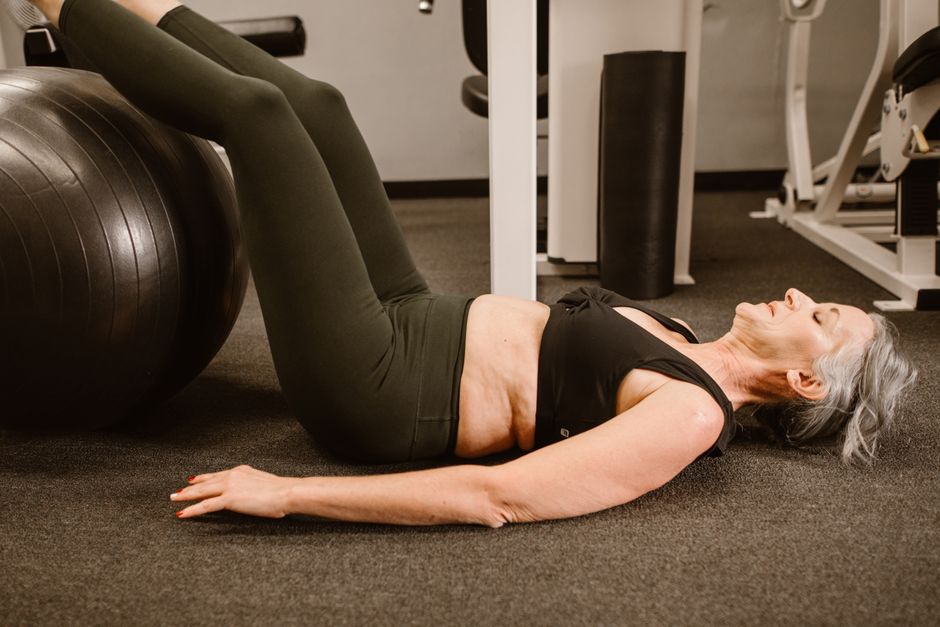
Why Home Workouts Are Ideal for Women Over 40
Starting a fitness journey in your 40s and beyond comes with unique advantages, and working out at home checks nearly every box busy women need. The convenience of a home workout plan for women over 40 means you skip the commute, dodge crowded gym floors, and fit movement into windows as small as 20 minutes. Privacy matters too — many women feel self-conscious when they are new to exercise or have changed physically over the years. At home, you can move in whatever clothes feel comfortable, take breaks when you need them, and skip the mirror if that is what you prefer.
Time is the number one barrier to consistent exercise for women in this life stage. Between work demands, family responsibilities, and everything else on your plate, driving to a gym can feel like a luxury you cannot afford. A no-equipment home workout plan removes that friction entirely. You can work out before the household wakes up, during lunch, or after the kids go to bed. The flexibility alone makes at-home fitness one of the most sustainable choices you can make for your health at this age.
Quick pick: Compare top-rated Womens Fitness options.
Understanding Your Body After 40
The hormonal shifts that begin in your 40s affect how your body builds and preserves muscle, stores fat, and recovers from exertion. Estrogen levels decline gradually, which tends to slow metabolic rate and reduce bone density if you are not actively supporting both. These changes are completely normal and well within your ability to address with the right movement routine.
Strength training becomes increasingly important after 40 because it counters the natural loss of lean muscle mass, known as sarcopenia. Preserving muscle tissue keeps your metabolism active, supports joint health, and protects against the bone density decline associated with perimenopause and menopause. You do not need weights or machines to achieve this. Bodyweight resistance exercises done consistently and with proper form deliver meaningful results for women at every fitness level.
Cardiovascular health deserves equal attention. Heart health priorities shift as you age, and regular aerobic activity helps maintain healthy blood pressure, cholesterol levels, and circulatory function. The good news is that effective cardio does not require a treadmill or stationary bike. You have viable options that raise your heart rate and benefit your cardiovascular system using only your body and your living room floor.
Building a Balanced Home Workout Plan
A well-rounded home workout plan for women over 40 should address four fitness pillars: cardiovascular endurance, muscular strength, flexibility, and balance. Neglecting any one of these areas creates gaps that show up as stiffness, instability, or plateaus in progress. Think of your routine as a complete package rather than a single focus.
Set goals that are specific, realistic, and tied to behaviors you can control. Instead of aiming to “lose weight” or “get fit,” target things like completing four home workouts per week, holding a plank for 30 seconds unbroken, or walking 7,000 steps on active days. Measurable behavior goals keep you motivated even when the scale does not move as quickly as you hoped.
Balance does not mean splitting your time evenly across all four pillars every single day. A practical weekly structure might include three cardio sessions, two to three strength sessions, and two flexibility or mobility sessions. You can combine elements — a circuit that stacks cardio intervals with strength moves, for example, gives you efficiency without sacrificing either pillar.
Cardio Exercises That Actually Work at Home
High-intensity interval training, or HIIT, is one of the most time-efficient cardio methods available for women over 40. The concept is straightforward: short bursts of vigorous effort followed by brief recovery periods. A typical sequence might involve 30 seconds of moving as hard as you can, followed by 30 to 60 seconds of lighter movement or rest. Repeat that cycle eight to twelve times for a complete workout that takes under 25 minutes.
Brisk movements you can execute at home include high knees, marching in place with an exaggerated arm swing, stepping side to side, and skipping in place without jumping. Modify the intensity by adjusting your range of motion and speed. If high impact feels hard on your joints, low-impact alternatives like step-touches and stationary marching deliver cardio benefits without the joint stress.
Dancing is an underrated cardio option that women over 40 often enjoy more than traditional workout formats. Following free online routines, moving to music you love, or simply freestyling in your living room for 20 to 30 minutes counts as legitimate aerobic activity. The enjoyment factor matters — you are far more likely to stick with movement you actually look forward to doing.
Strength Training With Zero Equipment
Bodyweight strength training is remarkably effective when executed with good form and progressive challenge. The key principle is using your own body weight as resistance and systematically increasing the demand as your strength improves. This might mean adding more repetitions, holding positions longer, slowing down the tempo, or adjusting the leverage to make a movement harder.
Squats and lunges form the foundation of a no-equipment lower-body routine for women over 40. A basic air squat targets your quadriceps, glutes, and hamstrings simultaneously. As you grow stronger, progress to goblet squats by holding a household item like a water jug or heavy book at your chest. Walking lunges, reverse lunges, and curtsy lunges add variety and challenge stabilizer muscles in your hips and ankles.
Upper-body strength matters equally. Push-ups can be performed on your knees or against a wall if standard push-ups feel too challenging right now. Wall push-ups are an exc nt starting point — stand facing a wall, place your hands flat against it at shoulder height, and lower your chest toward the wall by bending your elbows. Work toward knee push-ups, then full push-ups as your pushing strength develops. Plank holds and side planks build core stability and shoulder endurance at the same time.
Flexibility and Mobility for Women Over 40
Flexibility tends to decrease naturally after 40 if you are not actively maintaining it through regular movement. Tight hips, stiff shoulders, and limited ankle mobility are common complaints that have real solutions. Spending 10 to 15 minutes on mobility work most days of the week makes a noticeable difference in how your body feels during workouts and daily life.
Gentle yoga is one of the most accessible ways to improve flexibility from home. Poses like cat-cow, child\’s pose, low lunge with a gentle twist, and seated forward folds target the areas most women over 40 hold tension. You do not need a yoga mat, though one helps — a towel or carpeted surface works in a pinch. Follow along with free online videos tailored to beginners or to the specific areas you want to address.
Balance exercises are easy to overlook but critical for injury prevention as you age. Single-leg stands, heel-to-toe walking, and tree pose variations challenge your proprioception — your body\’s awareness of its position in space. Start by holding single-leg stands for 10 to 15 seconds with a chair or wall nearby for support. Work up to 30 seconds or longer as your balance improves.
Sample Weekly Home Workout Schedule
A practical schedule keeps you organized and ensures you hit all four fitness pillars across the week. The following table offers a starting framework you can adjust based on your schedule and energy levels.
| Day | Workout Type | Duration | Key Focus |
|---|---|---|---|
| Monday | Cardio HIIT | 20–25 min | Heart health and endurance |
| Tuesday | Strength — Lower Body | 25–30 min | Legs, glutes, and hips |
| Wednesday | Active Recovery / Yoga | 15–20 min | Flexibility and mobility |
| Thursday | Cardio Dance or Walk | 25–30 min | Aerobic fun and consistency |
| Friday | Strength — Upper Body | 25–30 min | Arms, chest, and core |
| Saturday | Balance and Stability | 15–20 min | Proprioception and fall prevention |
| Sunday | Rest or Light Walk | 20–30 min | Recovery and active rest |
Listen to your body and adjust as needed. Some weeks you might feel energetic and add a few extra minutes. Other weeks, a demanding schedule or poor sleep might mean scaling back without guilt. Consistency over weeks and months matters far more than any single workout.
Staying Motivated for the Long Haul
Motivation is not a fixed trait — it fluctuates, and that is completely normal. Building habits around your workouts makes the difference between exercise being something you do when you feel motivated and something you do consistently regardless of how you feel. Start as small as you need to in order to build the habit. Three 15-minute sessions per week is a perfectly valid starting point.
Find ways to make your workouts feel social even when exercising alone. Online communities focused on women\’s fitness over 40 offer accountability, encouragement, and shared experience. A workout buddy who checks in on your progress, even if that person lives across the country, adds a layer of commitment that helps on low-motivation days.
Tracking your progress matters more than most people realize. A simple log of what you did each day, how long you exercised, and how you felt afterward gives you concrete evidence of your consistency. Over weeks and months, those entries build into a record of achievement that is hard to dispute. Celebrate milestones — finishing your first full week, holding a plank for a full minute, completing your first 30-minute home workout without stopping. These wins deserve acknowledgment.
Frequently Asked Questions (FAQ)
What are common mistakes women over 40 make when starting home workouts?
Neglecting a proper warm-up is one of the most frequent errors. Jumping into intense movement without preparing your joints and muscles increases injury risk. Spend five minutes moving lightly and gently stretching before every workout. Another mistake is doing too much too soon — your body needs time to adapt, and ramping up gradually produces better long-term results than aggressive starts that lead to burnout or injury. Finally, many women focus exclusively on cardio while ignoring strength training, or vice versa. A balanced approach covering all four fitness pillars delivers the most health benefits.
How often should women over 40 work out at home?
Most health organizations recommend at least 150 minutes of moderate aerobic activity per week for adults, plus two or more strength training sessions targeting major muscle groups. For women over 40, spreading this across four to five days works well for most people. Include at least one or two full rest or active recovery days per week to allow your body to repair and adapt. Overtraining without adequate recovery leads to fatigue, decreased performance, and increased injury risk.
Can I really build strength and improve fitness without any equipment at home?
Absolutely. Bodyweight exercises provide sufficient resistance to build meaningful strength and improve cardiovascular fitness when applied consistently. The principle of progressive overload — gradually increasing the demand on your muscles over time — applies whether you are using a barbell or your own body. You can increase difficulty by adding repetitions, slowing down the tempo of movements, reducing rest periods, or adjusting your body position to increase leverage. Most women are surprised by how quickly they can progress using nothing but their own body weight and the floor beneath their feet.
When should I consult a healthcare professional before starting a home workout plan?
If you have been diagnosed with heart disease, high blood pressure, osteoporosis, arthritis, or any condition that affects your joints, spine, or cardiovascular system, check with your doctor before beginning a new exercise program. The same applies if you are taking medications that affect heart rate, balance, or blood pressure response to exercise. Women who are newly pregnant or postpartum should also seek guidance tailored to their situation. Beyond these specific concerns, most healthy women over 40 can safely begin a gentle home workout routine and build from there.
What modifications should I use if I have joint pain or limited mobility?
Low-impact cardio options like marching in place, seated movements, or step-touches reduce stress on knees and hips compared to jumping or high-impact alternatives. For strength exercises, wall push-ups and knee push-ups protect your wrists and shoulders while still building upper-body strength. Seated or supported versions of squats and lunges allow you to train your legs safely if standing balance is a concern. Yoga and stretching can be adapted to seated positions for most poses. Prioritize pain-free range of motion over depth or intensity — there is always a way to participate meaningfully without exacerbating discomfort.
Top Product Recommendations
| Product Name | Rating | Key Feature | Est. Price | Action |
|---|---|---|---|---|
| Best Womens Fitness Pick | ★★★★★ | Top-rated overall | $25–$45 | Check Lowest Price on Amazon |
| Budget Womens Fitness Option | ★★★★☆ | Great for beginners | $12–$28 | Check Lowest Price on Amazon |
| Premium Womens Fitness Choice | ★★★★☆ | Pro-level results | $50–$90 | Check Lowest Price on Amazon |
Affiliate Disclosure: This post contains affiliate links. We may earn a commission if you buy through our links, at no extra cost to you.
Leave a Reply